- Soch Vichaar
- Posts
- The Delhi Ordinance: Fair or Unfair?
The Delhi Ordinance: Fair or Unfair?

Mohak Mangal
August 4th, 2023
What happened?
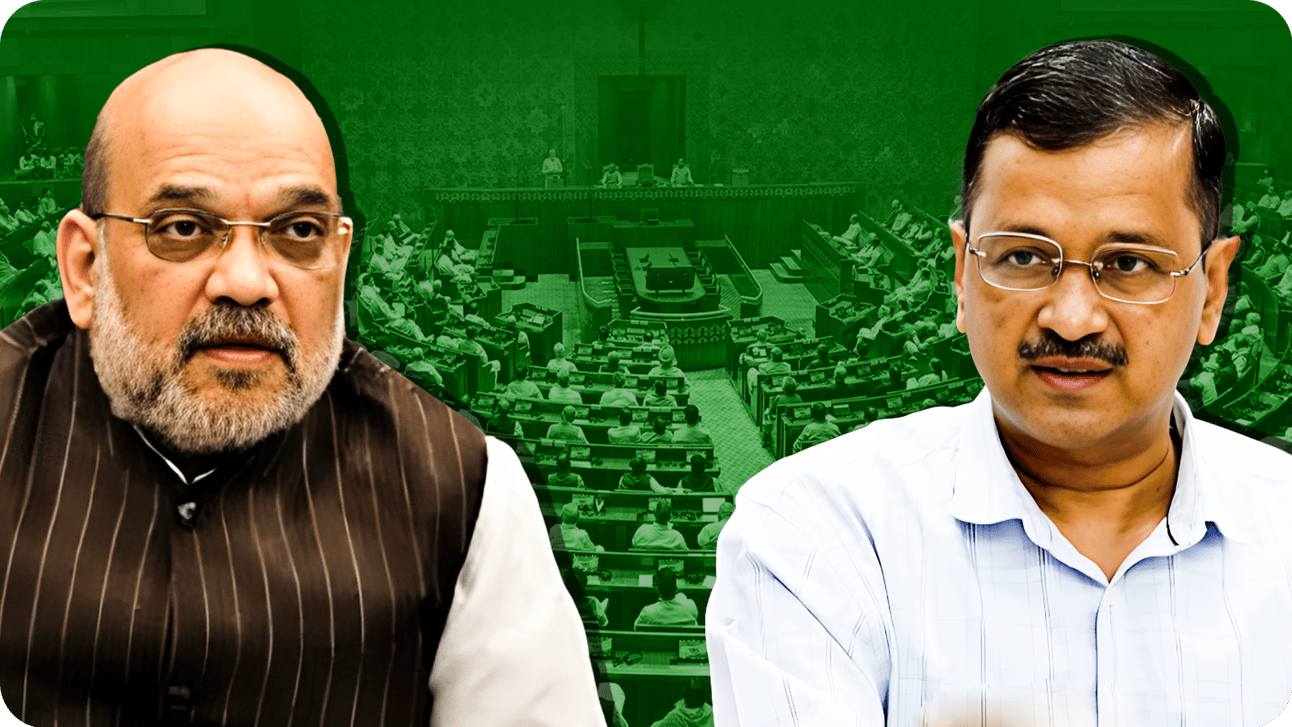
On July 3, after a four-hour-long debate, the Lok Sabha passed the Government of National Capital Territory of Delhi (Amendment) Bill, 2023. The bill was passed with a voice vote amid a walkout by the Opposition.
Why does it matter?
The Centre introduced the Bill in May, days after the Supreme Court ruled that the Delhi government has the power to control civil services in Delhi except in matters of law and order, police and land. The judgement limited the role of the Lieutenant Governor (LG) of Delhi, who is appointed by the President, in the matter of handling the bureaucrats.
With the passing of the Bill, the LG will now have the power to transfer and post civil servants in Delhi. He/she can overrule the Delhi Chief Minister’s decision in this regard. Therefore, many observers have raised concerns over the Centre’s intention to implement the Bill.
What are the arguments from both sides?
Side 1: The Bill should NOT have passed:
Triple chain of command: The Bill nullifies the triple chain of command in the governance of Delhi. According to this, the civil services are accountable to the Ministers of the elected government. The Ministers were, in turn, accountable to the legislature, which is ultimately elected by the people of Delhi. However, the Bill offers more power to the LG over appointments and the transfer of civil servants. The elected representatives of the people of Delhi will be powerless in this regard.
Overruling SC’s order: The SC’s order in May struck a balance between the interest of the Centre and the authority of the elected Delhi government. It tried to uphold the value of federalism by granting executive power to the Delhi government. According to the SC, the Delhi government needs to have executive power to enforce its legislation properly. However, the Centre has overruled the SC’s order with the Bill.
Side 2: The Bill needed to get passed:
Union Territory: Most of the arguments of Side 1 stem from considering Delhi a state. However, Delhi is a Union Territory. It doesn’t have its own State Public Service Commission (SPSC), which a normal state would do. This commission oversees the appointment of civil servants. In the case of Delhi, it can only happen with the government sending a list of recommendations to the LG. However, in case of a difference of opinion, the LG’s decision would be final.
Prevents misuse: Home Minister Amit Shah argued in Lok Sabha that the AAP-led Delhi government has been opposing the Bill as it will lose power over the vigilance department. The department is involved in investigating malpractices and corruption done by government officials in Delhi. Shah alleged that AAP has been using the department to hide its crimes. Therefore, the Bill will prevent the misuse of civil services.
What’s next?
With a nod from the Lok Sabha, the Bill will now be presented in the Rajya Sabha (RS). Once passed by the RS, the Bill will need the President’s consent to be turned into an Act. However, if the Bill is rejected in the Rajya Sabha, the President will call a joining sitting of both LS and RS to arrive at a conclusion.
India bans laptop import
What happened?
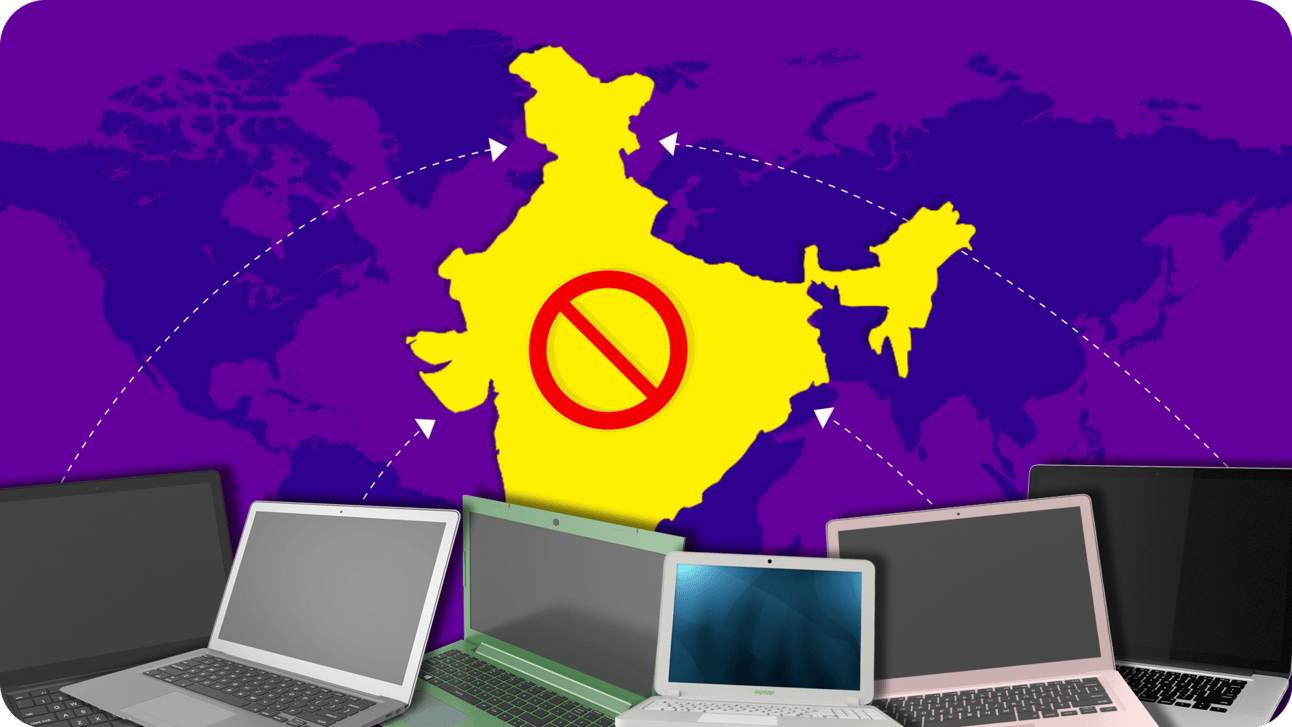
On July 3, the Indian government put import restrictions on personal computers, laptops, tablets, and micro-computers. Foreign companies will now be required to obtain import licenses from the government to sell these products in India. However, the companies wouldn’t need the license if they manufacture the products here.
Why the ban?
Boost domestic market
The primary reason behind the move is to increase the manufacturing of these electronic items within the country. Due to the restrictions, companies such as Apple, Samsung, HP, and Acer would likely open manufacturing units in India, boosting India’s electronic sector. This falls in line with India’s goal to produce electronics worth $300 billion annually by 2026.
Security concerns
According to the new guidelines, the companies will now have to obtain licenses from the government to ship and sell computers and tablets in India. This will ensure that India obtains these products from ‘trusted partners’ whose hardware doesn’t pose a security threat to its citizens. The threat could come in the form of compromise in sensitive and personal data. Moreover, private companies are at risk of spying. For instance, in 2018, a report revealed that China had spied on more than 30 American companies by supplying them with hardware containing tapped microchips. Therefore, the ban will reduce such security threats to Indian private companies.
Reduce dependence on China
Experts have pointed out that with the ban, the government is trying to curb imports from China. In 2022-23, India imported $5.33 billion worth of laptops and personal computers. 75% of these imports came from China. Due to its sour ties with China, it’s clear that India wants to reduce its dependence on its neighbouring country.
What are the impacts?
Increase in prices
The ban on imports will create scarcity in the country, leading to an increase in demand. Laptops and tablets are generally sold at lower prices than the MRP (Maximum Retail Price). Due to increased demand, the sellers will have no incentive to offer attractive discounts on these gadgets. Therefore, the prices of laptops and tablets are likely to go up in the coming weeks.
Travelling overseas
If you're coming back to India after a trip abroad, you can bring along one laptop, tablet, all-in-one PC, or super-small computer in your luggage without any worries about import restrictions. This rule also covers stuff you bought online and had delivered through mail or courier.
What’s next?
The government is currently working to clear shipments at ports after the announcement on Thursday led to an immediate crackdown on electronic shipments. It’s likely to delay the implementation of restrictions so that the companies can obtain necessary licenses from the government.
Un-charted
Digital India: Have we succeeded?

Source: The Hindu
These charts show how digital transactions soared over time in India in the past two years. This is a testimony to the country’s improved digital payment ecosystem. Moreover, UPI, an indigenously developed payment system, has been adopted by countries like France, Singapore, UAE, UK, etc. NRIs with an Indian bank account living in these countries and Indians travelling there can now make payments using UPI, eliminating the need for forex cards and carrying cash.
Yet, India’s performance remains unimpressive compared to that of other developing countries when it comes to digital payments. Moreover, there are hurdles that the country must overcome.

Gender-wise change in digital transactions (Source: The Hindu)
What are some of the hurdles?
Gender gap
Only 28% of women carried out digital transactions in 2021. The corresponding figure for the male population was 41%. This shows a sharp gender gap. It’s merely an extension of the digital gap commonly seen in India. Women have lower excess to the internet and smartphones than men due to the prevalent patriarchal order.
Inclusion of the poor
The Centre Jan Dhan Yojana, which aimed to make banking more accessible to the poor, succeeded on paper. In 2021, 80% of the Indian population had a bank account, as opposed to 53% in 2014. However, some estimates reveal that 38% of bank accounts are inactive. Allegedly, several zero-balance accounts were created to meet the official figures, but now they remain inactive.
Rural-urban gap
In 2021, only 30% of Indians in rural areas made or received digital payments, as opposed to 40% in urban areas. Cash transactions still rule in rural areas. Poor internet connections and lack of digital literacy are some of the reasons why people in rural India have been finding it difficult to adopt the digital payment system.
India still has a long way to go before realising its dream of becoming truly ‘digital’. The authorities could start by creating financial and digital literacy programmes, especially in rural India. The digital gender gap could be reduced by focusing on the larger solution–women's empowerment.
NOTEWORTHY 📑
Check out this beautiful photo feature on the lives of Jammu and Kashmir’s Bakarwal community.
How the British robbed Brazil out of its rubber.
Jadav Payeng: A man who single-handedly planted a forest.
Which countries are losing the global Skills Wars?
James Webb telescope captures the end stages of a dying star's life
SHARE THIS VICHAAR 🙌

If you enjoyed reading my newsletter, please consider sharing it with your loved ones.
Was this forwarded to you? Sign up here.
If you want to give us feedback, Click here.
Read our previous newsletters here
Reply