- Soch Vichaar
- Posts
- India's Masterstroke at G20
India's Masterstroke at G20

Mohak Mangal
September 12th, 2023
What happened?
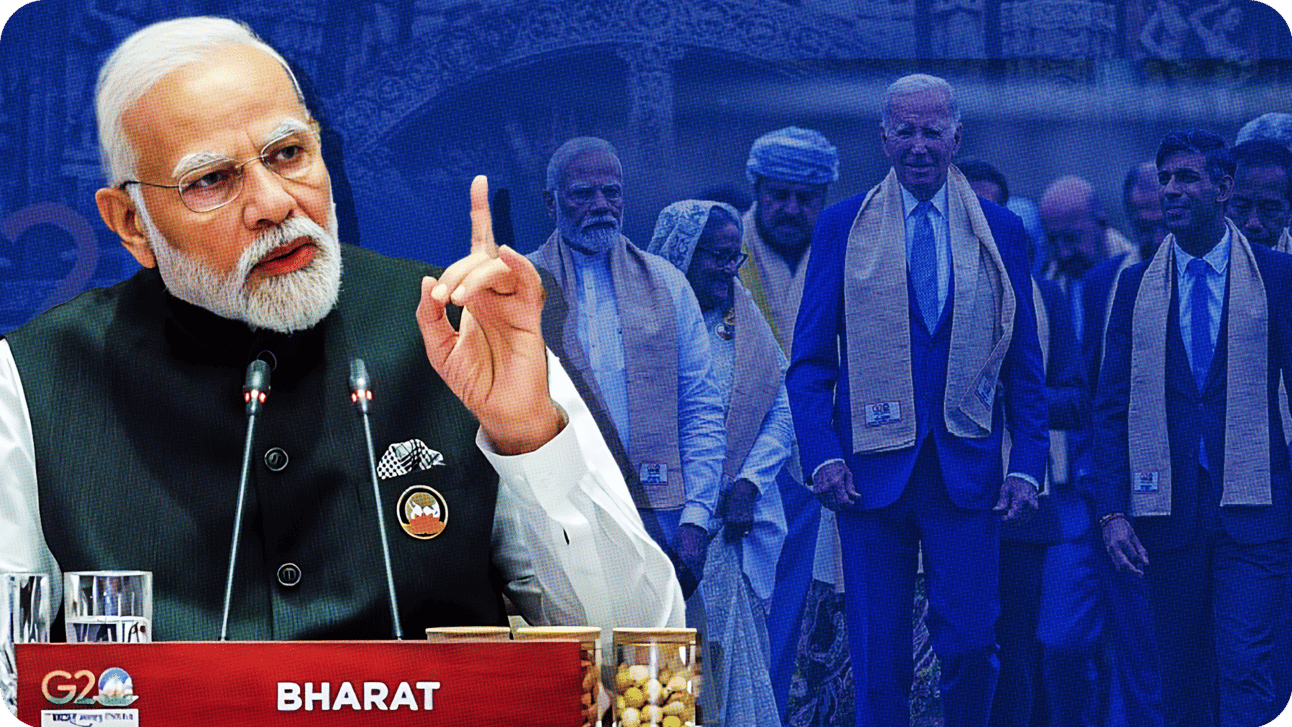
On September 9 and 10, India hosted the G20 leaders’ summit at Bharat Mandapam, New Delhi. The summit was attended by heads of state of the participating nations, barring Russia, China, and Mexico, who sent high-level representatives. The leaders of various international organisations, such as the World Bank and World Health Organisation, were also in attendance.
At the closing ceremony, PM Modi transferred the G20 presidency to Brazil by handing President Luiz Inacio Lula da Silva the ceremonial gavel.
Why does it matter? ,
G20 brings together the most important industrialised and developing countries to discuss global economics and pressing global issues. The members represent around 85% of the world’s GDP and roughly two-thirds of its population.
With its G20 presidency, India positioned itself as the voice of the Global South. It has hosted 220 meetings across 60 cities in India since its presidency began in December 2022. The government spent 4100 crore for the leaders’ meeting in Delhi alone, four times the amount designated in the 2023-24 budget.
What were the major outcomes?
New addition
India advocated for adding the African Union as a permanent member of the G20 bloc. The African Union, which represents 55 member states situated across the African continent, was welcomed to the block on the 1st day of the summit.
New Delhi Declaration
Before the summit, observers and experts believed that the leaders would fail to produce a joint statement, given the division among the bloc regarding the war in Ukraine. After much back and forth, the New Delhi Declaration was adopted with the nod of every member nation. The world leaders praised India for its role in negotiating the consensus. However, the Declaration received criticism from Ukraine.
Modern-day spice route
One of the major outcomes of the summit was the announcement of the India-Middle East-European Economic Corridor (IMEC). It’s a network of transport corridors, including railway lines and sea lanes, to connect Asia, the Arabian Gulf, and Europe. It is seen as a counter to China’s Belt and Road Initiative.
What’s next?
India will continue to hold the presidency for G20 till November 30. PM Modi will call a virtual summit at the end of November to review the progress on the Declaration adopted by the leaders.
The next G20 summit will be held in Rio de Janeiro in November 2024.
Dose of Positivity
A space for the elderly
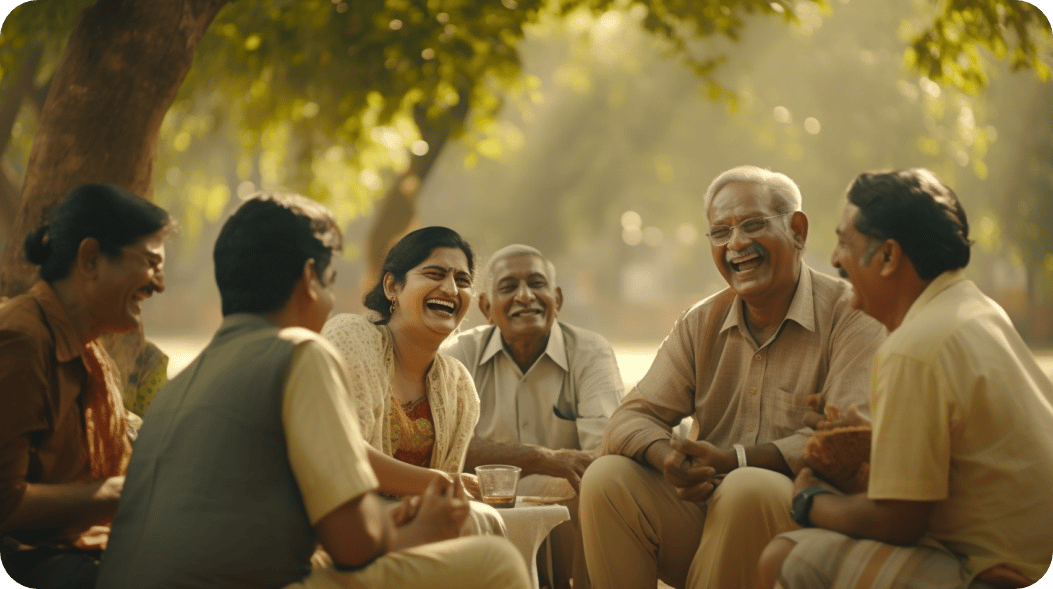
In 2022, a survey by PAN Healthcare found that over 65% of older people in India feel lonely. The World Health Organisation (WHO) also called for reducing social isolation and loneliness among older people. It suggests that isolation can seriously impact older people’s longevity and physical and mental health.
The municipality of Malappuram district in Kerala has taken an inspiring decision to address this issue. It has opened a centre for the elderly known as Badai Bazaar. Badai is a Malayalam slang, meaning ‘bragging’ and ‘boasting’. As the name suggests, the centre provides a space for older people to chat and connect.
The centre is open to people above 60 from 6 AM to 7 PM. It’s free of cost. It’s managed by a committee of senior citizens who use them.
It also offers free medical checkups to the senior citizens. Some businesses are sponsoring newspapers, magazines, and television for the centre.
Since its inception, The Badai Bazaar has attracted people from neighbouring villages. A seventy-one-year-old visitor said he finds more warmth at the Bazaar than with his family.
This exceptional reception has promoted the Municipality to open another such centre in Malappuram. In addition to that, it has been planning to open more than 25 Badai Bazaars.
The Malappuram municipality’s action is praiseworthy. It should inspire other municipalities nationwide to open similar centres for the elderly. This would be a huge step towards reducing isolation among the older people in our country.
Bonus Section
Inside the Interview Room

How do you stand apart from the crowd when applying for a job? Having the necessary skills and experience isn’t enough to guarantee your selection during a job interview. How you present yourself and come across to the interviewers can be the make-or-break moment. Here’s what Harvard Business School and Forbes have to say about answering some of the most common questions asked during the interviews:
Could you tell us about yourself?
Tell an impressive story. Start with where you’re now. Discuss how you got there. The real question is: How does your personality and background benefit the organisation? Be specific and describe how your academic training and passion for the subject or the industry make you a great fit for the job.
Why do you want this job?
Before you appear for the interview, read up on everything you can about the company: its values, missions, origin story, etc. Identify what stands out the most for you about the company. Describe how it resonates with you and your career path.
How do you deal with pressure or stressful situations?
The ability to stay calm under pressure is a precious talent. Share an instance where you remained calm despite the pressure. If you’re still learning to deal with stressful situations, acknowledge it. Share the steps you’re taking to handle such a situation better in the future.
What are your salary expectations?
Research ahead of time to know the average salary of the role you’re applying to. You could refer to trusted websites for the industry standard salary range. You could also reach out to the people in the field on LinkedIn. During the interview, discuss a salary range instead of a specific number. This will leave room for negotiation. Don’t forget to mention that you also value the work experience that comes with the job, not just the salary.
Liked the Bonus Section? Fill out this form and join the waitlist for our new newsletter!
NOTEWORTHY 📑
Learn about the major outcomes of all previous G20 summits.
September 11 marked 130 years since Vivekananda gave his iconic Chicago speech. Revisit what he said–and what he didn’t.
This African city turns sewage into drinking water in 24 hours
The courtesans and their influence on Indian music.
Why do we need to rethink our relationship with cyberspace?
SHARE THIS VICHAAR 🙌

If you enjoyed reading my newsletter, please consider sharing it with your loved ones.
Was this forwarded to you? Sign up here.
If you want to give us feedback, Click here.
Read our previous newsletters here
Reply