- Soch Vichaar
- Posts
- Should Tamil Nadu ban NEET?
Should Tamil Nadu ban NEET?

Mohak Mangal
August 18th, 2023
Should NEET be banned in TN?
What happened?
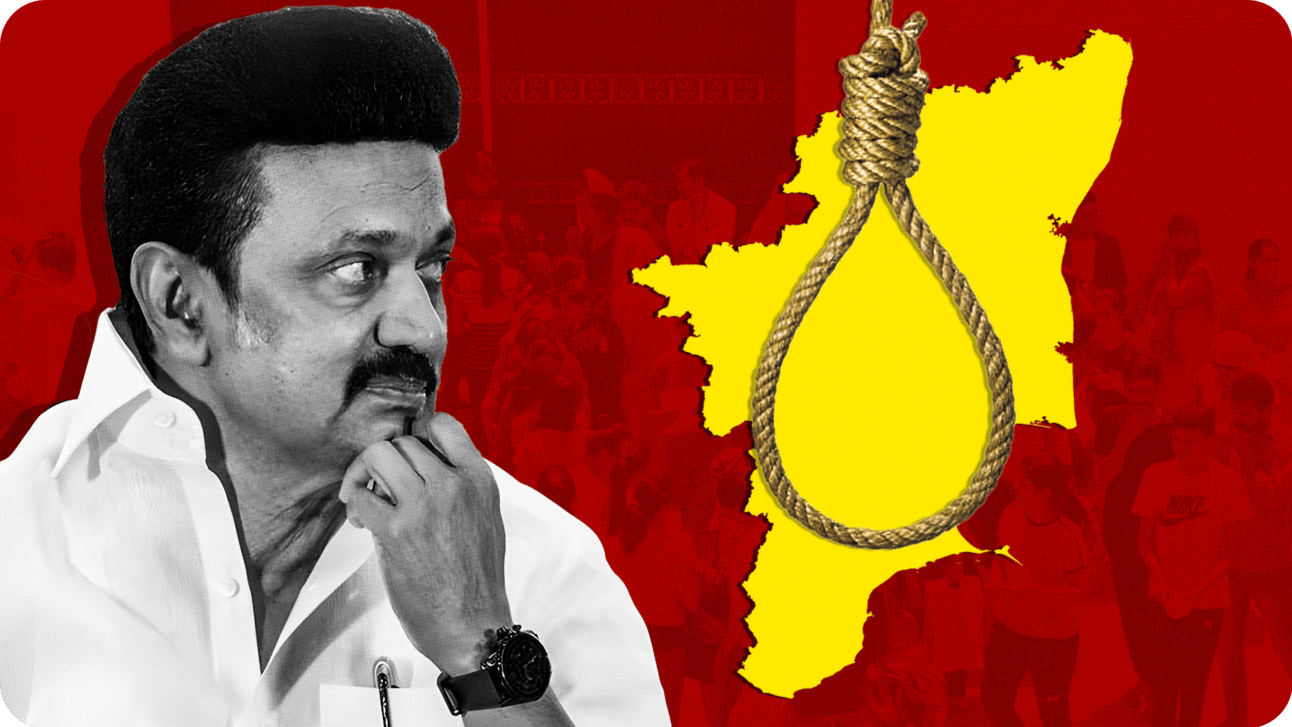
In distressing news from Tamil Nadu, a 19-year-old boy ended his life after failing the NEET, a pan-Indian entrance test for medical and dental colleges. A day after, his father took his life as well.
Tamil Nadu CM MK Stalin urged the President of India to clear the anti-NEET bill, saying each passing day has been costing lives in the state.
Why does it matter?
In 2017, the suicide of a 17-year-old girl in the state triggered strong political opposition against the NEET exam. Though the girl was a school topper, she failed to clear the NEET exam. The state government formed a committee to study the impact of NEET, and based on its report, the government passed an anti-NEET bill in 2021. The bill seeks to replace the NEET exam with XII marks as a criterion for admission. Though it was cleared by the state assembly twice, the state governor hasn’t given his nod to the bill yet. Without his approval, the bill can’t become law.
This stalemate over the bill has renewed the debate on the validity of the NEET exam in the state.
What are the arguments from both sides?
Side 1: NEET should be banned in TN:
Anti-poor: The report submitted by the committee set up by the TN government found that NEET favoured CBSE students who attend coaching classes, study in private English-medium schools and are from rich urban backgrounds. It uses the NCERT syllabus as its backbone. Therefore, it’s unfair to the underprivileged students studying in the state board.
Rote framework: NEET focuses more on mechanical learning and neglects the importance of students’ quality and aptitude. The multiple-choice format of the exam is a poor substitute for the more holistic school-based/board exam. That’s why admissions to medical colleges must be given on the basis of Class XII results.
Side 2: NEET should NOT be banned in TN:
Merit: The field of medicine shouldn’t become a tool for anyone to fight for social justice, equality, etc. It’s a critical field. The citizens entrust their lives to the hands of doctors. That’s why it's crucial that the admissions take place based on the merit and competence of the student. The NEET exam ensures this is the best.
Transparency: The NEET examination establishes a reliable and consistent structure for the admission process. It ensures transparency and eliminates hidden regulations or external influences, thus removing corruption and malpractices.
What’s next?
The youth wing of the ruling DMK government has been staging demonstrations in the state to press the Governor to give his approval to the bill. However, there has been no response regarding it from his office. Previously, he had said that he would never clear the bill.
Un-charted
Source: The Hindu
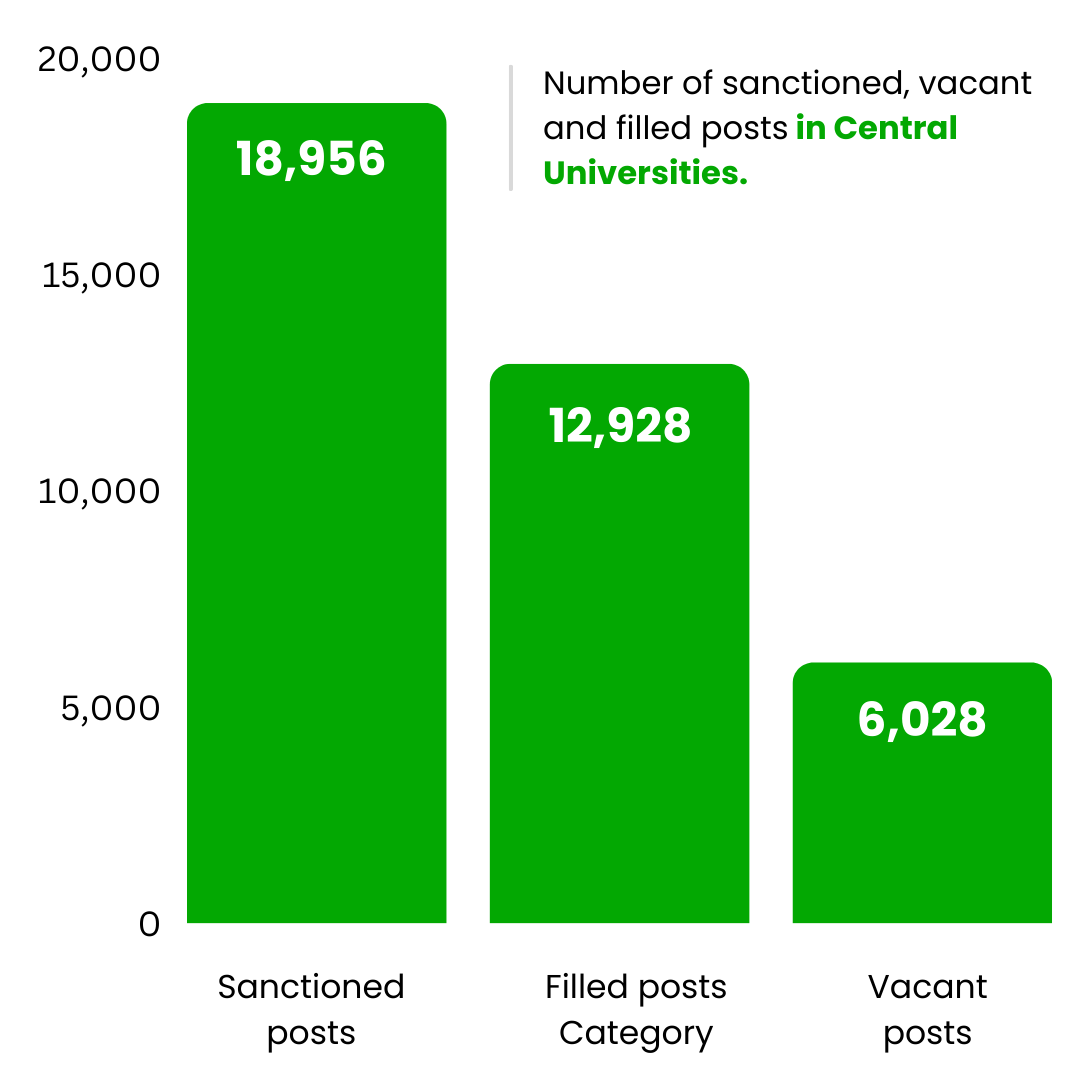
This chart shows the bleak reality of our public universities. In 45 Central Universities across India, over 30% of the teaching post remain vacant.
The situation varies across states. For instance, 88% of the teaching positions remain vacant in Odisha’s central universities. Whereas for states like Kerala, the figure is 15%.
What could explain this phenomenon?
Funding: One of the primary factors behind the high vacancies is the lack of funding. Most central universities don’t receive proper funding to fill their teaching posts.
Location: The location of the university also plays a role. Most professors are hesitant to work at universities situated in rural areas. For example, the Central University of Odisha, located nearly 500 km from the state’s capital, Bhubaneshwar, has a vacancy of 88%.
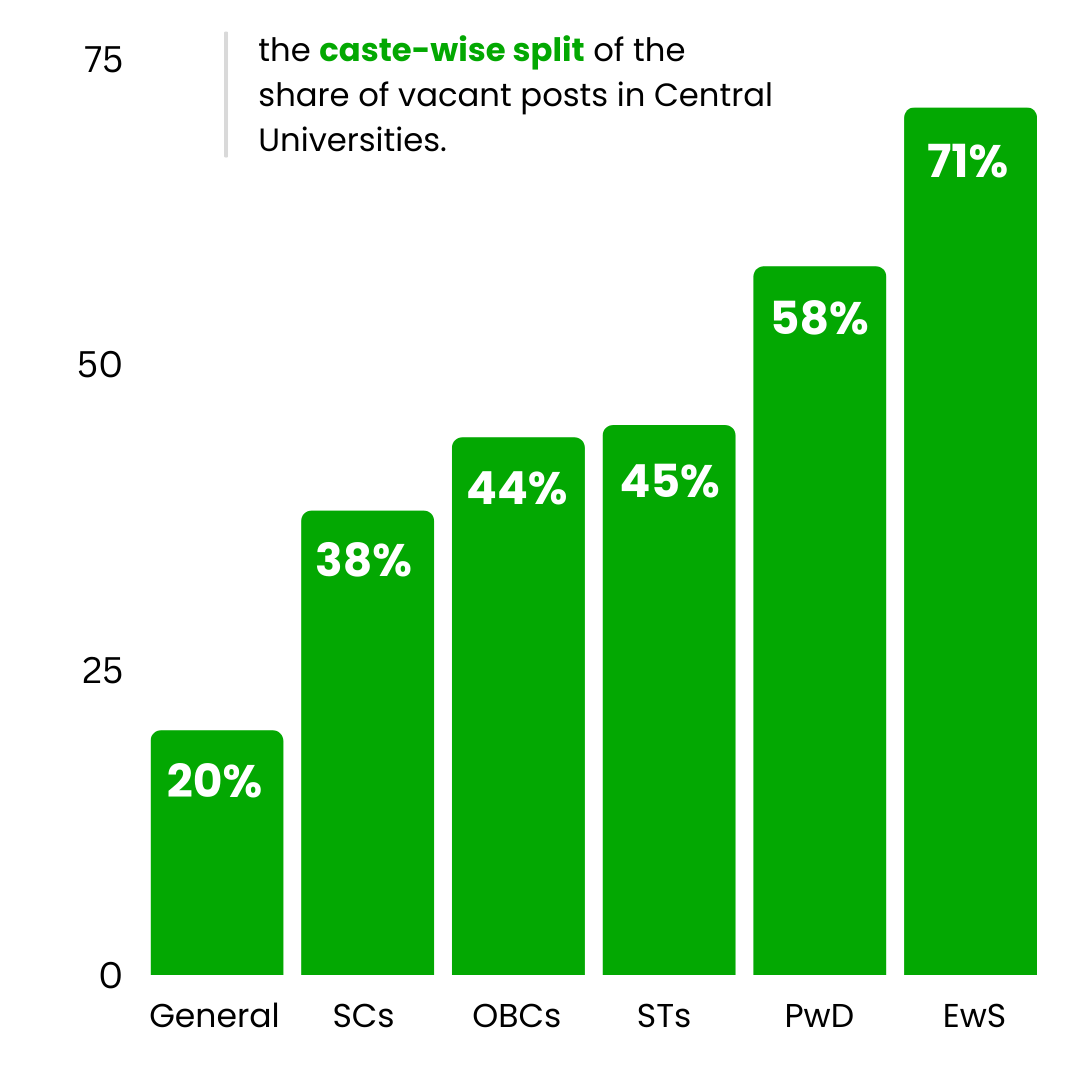
Reservation: The reservation of teaching posts also adds to the phenomenon. This could be because of two reasons: either not enough candidates from the reserved categories are applying for the posts, or the universities can’t find deserving candidates. Here’s the visualisation of the data:
Source: The Hindu
What are the implications?
In one of my recent videos, I talked about the subpar quality of research in Indian universities and what we should do to tackle the issue. The higher vacancies in the country’s central universities only adds to the issue. The underprivileged, deserving students, who comprise the largest section of public universities, bear the brunt of this.
The poor teacher-student ratio also leads to the professors feeling overburdened. It also limits personalised attention and positive learning outcomes. An adequate teacher-student ratio will create a favourable learning environment in our country’s central universities and promote research and innovation.
Bonus section!
How to impress your boss?

If you’ve ever worked on a project and needed advice or input from your seniors, you would surely have wondered the best way to communicate with them. Let’s break down some approaches:
Bad Response: "Here is a problem. What should I do?"
This shows that you haven’t considered the solutions before asking for advice.
Good Response: "Here is a problem. I suggest we do X. What do you think?”
It shows that you’re actively participating in finding the solution and not simply relying on someone’s advice.
Great Response: "Here is a problem. We have 3 options. I suggest we choose option A because of X, Y, and Z. What do you think?"
It shows that you’ve reflected on all the options and guides your senior into coming up with the best solution. Perhaps while reflecting on the options you will solve the problem yourself.
Liked the Bonus Section? Fill out this form and join the waitlist for our new newsletter!
NOTEWORTHY 📑
How this publishing house in Kashmir has preserved Kashmir’s literary legacy for decades.
Chandrayaan-3 completes yet another manoeuvre as it prepares to land on the moon’s surface.
How this Japanese technique of ‘forest bathing’ can help you recover from stress.
Tawaifs: the royal entertainers and their contribution to Indian independence.
How difficult is it to turn seawater into drinking water?
SHARE THIS VICHAAR 🙌

If you enjoyed reading my newsletter, please consider sharing it with your loved ones.
Was this forwarded to you? Sign up here.
If you want to give us feedback, Click here.
Read our previous newsletters here
Reply