- Soch Vichaar
- Posts
- Should India Implement the Uniform Civil Code (UCC)?
Should India Implement the Uniform Civil Code (UCC)?

Mohak Mangal
June 30th, 2023
What happened?
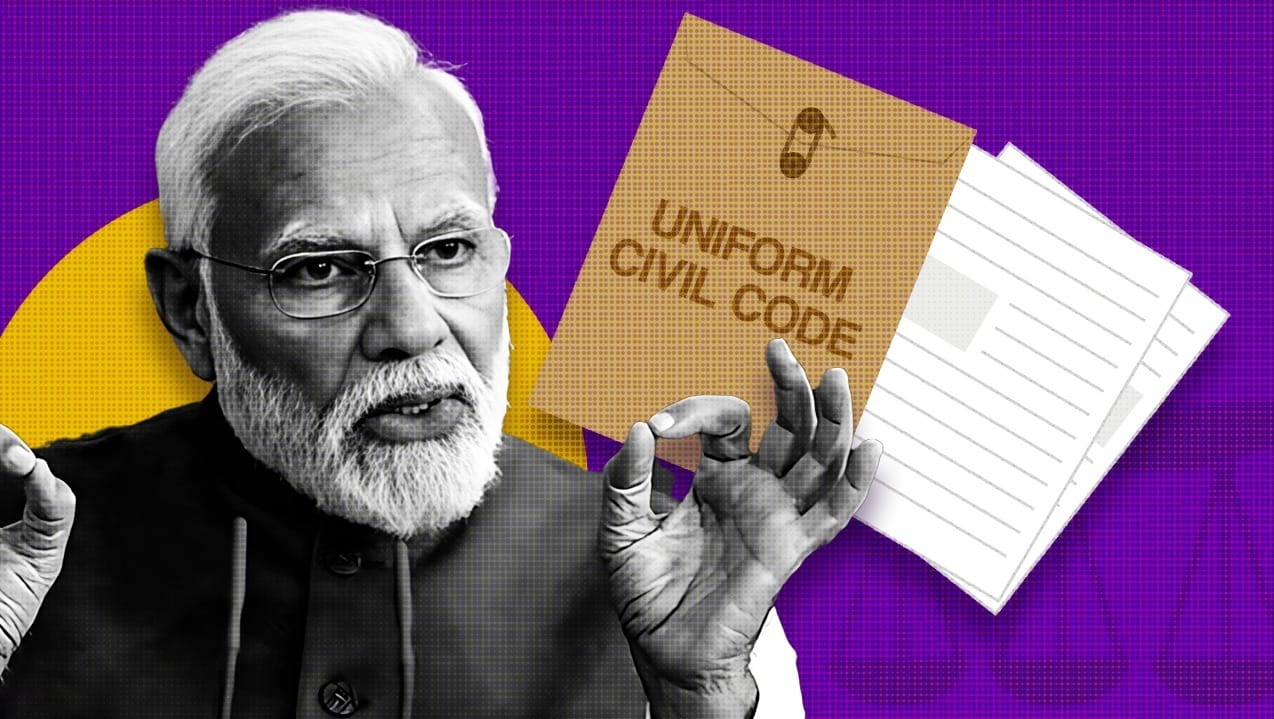
On June 27th, while addressing BJP workers in Bhopal, PM Modi asserted the need for implementing the Uniform Civil Code (UCC). He said the country could not run with the dual system of 'separate laws for separate communities.' His remark has reopened the debate surrounding the UCC. Many opposition political parties, activists, and communities who oppose the UCC have slammed PM's remarks, claiming that it's a ploy by the government to erase minority practices and rituals.
Why does it matter?
The Uniform Civil Code (UCC) proposes to replace personal laws based on religion, customs, and traditions and implement uniform personal/civil law. This law will apply to all religious communities in their personal matters such as marriage, divorce, inheritance, adoption, etc. It has been a topic of debate ever since the days of the Constituent Assembly that framed India's Constitution. It was included in Article 44 among the Directive Principles of State Policy, stating that "the State shall endeavour to secure for the citizens a uniform civil code throughout the territory of India". Directive Principles are not enforceable by the court. They inform and guide the government.
What are the arguments from both sides?
Side 1: The government should implement the UCC:
Equality and uniformity: A democratic state is built on the ideal of equality. Implementing UCC will promote equality and uniformity among all citizens and ensure that everyone, regardless of their religious affiliations, is subjected to the same set of laws. It will also promote integrity by establishing a shared platform for diverse communities.
Gender justice: Under personal laws, women face several discriminatory practices. For example, the rights of women regarding inheritance differ based on their religion in India. Under the Hindu Succession Act of 1956, Hindu women have equal rights to inherit property from their parents and have the same entitlement as Hindu men. However, under Muslim Personal laws, Muslim women's share of the property is half that of Muslim men.
Simplification: Multiple personal laws makes the Indian legal system complex and confusing. The UCC will simplify and harmonise the legal framework and help individuals to understand and navigate the legal system better.
Side 2: The government should NOT implement the UCC:
Violation of rights: India is a secular nation. Articles 25-28 guarantee the right to freedom of religion to every Indian citizen. Under this right, an individual can practice any religion of their choice, including following its distinct practices and rituals. For instance, Article 26 allows every religious denomination to manage its affairs. Therefore, by replacing personal laws with UCC, the government will violate a citizen's fundamental right, i.e., freedom of religion.
Modification: In 2018, the 21st Law Commission, which brought up a consultation paper on 'Reform of Family Law', said that it was 'discrimination and not differences' that caused inequality against women. Thus, rather than replacing personal laws, the government should modify and codify the existing laws to tackle discrimination and inequality.
Cultural and Religious Pluralism: India has rich cultural and religious diversity. Personal laws preserve these distinct cultural expressions. Implementing UCC will undermine different communities' cultural and religious identities. In its statement in 2018, the 21st Law Commission said, "Cultural diversity cannot be compromised to the extent that our urge for uniformity itself becomes a reason for threat to the territorial integrity of the nation."
What's next?
On June 14th, the 21st Law Commission sought fresh suggestions on UCC from various stakeholders, including public and religious organisations. On June 28th, the panel received 8.5 lakh responses, according to the Commission Chairman Justice Ritu Raj Awasthi. It will continue receiving suggestions until July 13th. AAP has come in support of the government for implementing the UCC, saying it approves of the code 'in principle'. Other stakeholders, however, have remarked that the government rethink its decision.
Tomato price hike: the government to blame?
What happened?
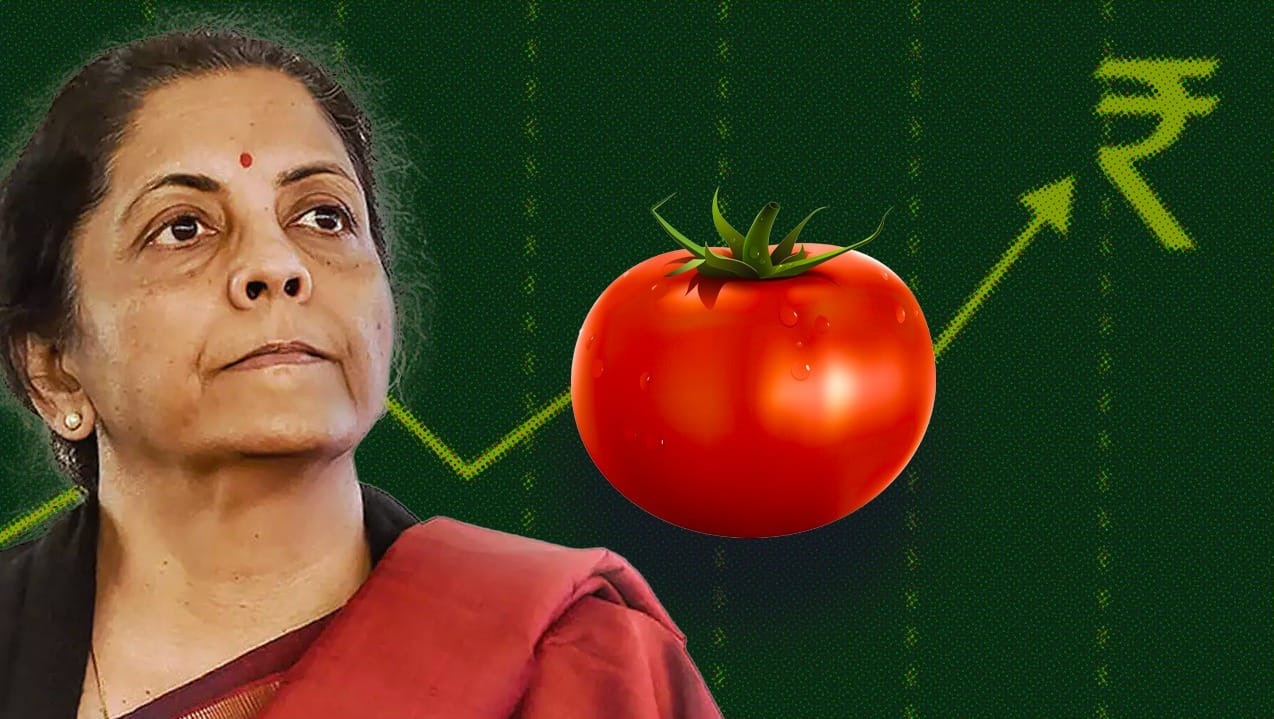
On June 27th, news emerged that the price of tomato crossed Rs. 100 per kg in several parts of India. In Chandigarh and Panchkula, the tomatoes sold at Rs. 25-30 per kg a week ago are now being sold at Rs. 80-100 per kg. Moreover, the prices of other vegetables have also increased since May.
Why does it matter?
Hikes in prices of essential commodities have raised eyebrows over the continuing trend of rising inflation in India. Inflation can have a detrimental impact on an individual’s purchasing power. The sustained increase in the price of goods and services makes it difficult for poor and middle-class Indians to afford essential items.
What are the arguments from both sides?
Side 1: The Centre should be blamed:
Wrong economic policy: The government’s implementation of the Goods and Services Tax (GST) has played a role in the inflation surge in India. The GST raised the rate of tax on goods and services. It also brought some business activities within its coverage that lay outside the tax net earlier. The burden on the business is passed on to the consumers through increased prices.
Ignoring priorities: The opposition has blamed the Centre for ignoring the priorities of the common people and favouring big business with its policy measures in controlling inflation. Jairam Ramesh, the general secretary of Congress, expressed that PM Modi had ascribed Tomato, Onion, and Potato as his ‘TOP’ priority. But the rise in the prices of these items shows that the PM has failed to live by his words.
Limited intervention: The government failed to intervene in the market when the prices of tomatoes crashed in April-May, which led many farmers to abandon their crops or reduce their acreage. This resulted in a supply shortage and a subsequent spike in prices. Moreover, the government failed to provide adequate support to the tomato growers in terms of crop insurance and transport subsidies. This increased the cost of production and reduced the profitability of the farmers.
Side 2: The Centre should NOT be blamed:
Disinflation: The inflation rate in India has actually gone down. Consumer Price Index (CPI) inflation, which measures the changes in average price levels of goods and services purchased by households over time, was at 4.25% in May, the lowest in 25 months. Meanwhile, the Wholesale Price Index (WPI), which measures the overall prices of goods before selling at retail prices, was at -0.92% in April compared to 1.34% in March and 3.85% in Feb.
Centre’s efforts: The government has responded well by taking measures to cool down the rising prices. For instance, last year, India banned wheat exports to maintain food security in India. Moreover, it reduced import duty on key raw materials and crude edible oils.
Efforts by RBI: India’s central bank is at the helm of controlling inflation and economic slowdown. The Reserve Bank of India has also been actively taking measures in this regard. For instance, between May 2022 and February 2023, the RBI raised the interest rate by a cumulative 2.5% to combat inflation. Increased interest rates encourage to spend less money and save more.
What’s next?
The traders and growers have ruled out the chances of price softening anytime soon. An expert suggested that the supply of tomatoes has been affected by floods and heavy rain in the key growing states. Due to seasonal factors, the higher prices are expected to stay for the next few months.
Will Byju’s Downfall Affect the Indian Ed-Tech Startup Ecosystem?
What happened?
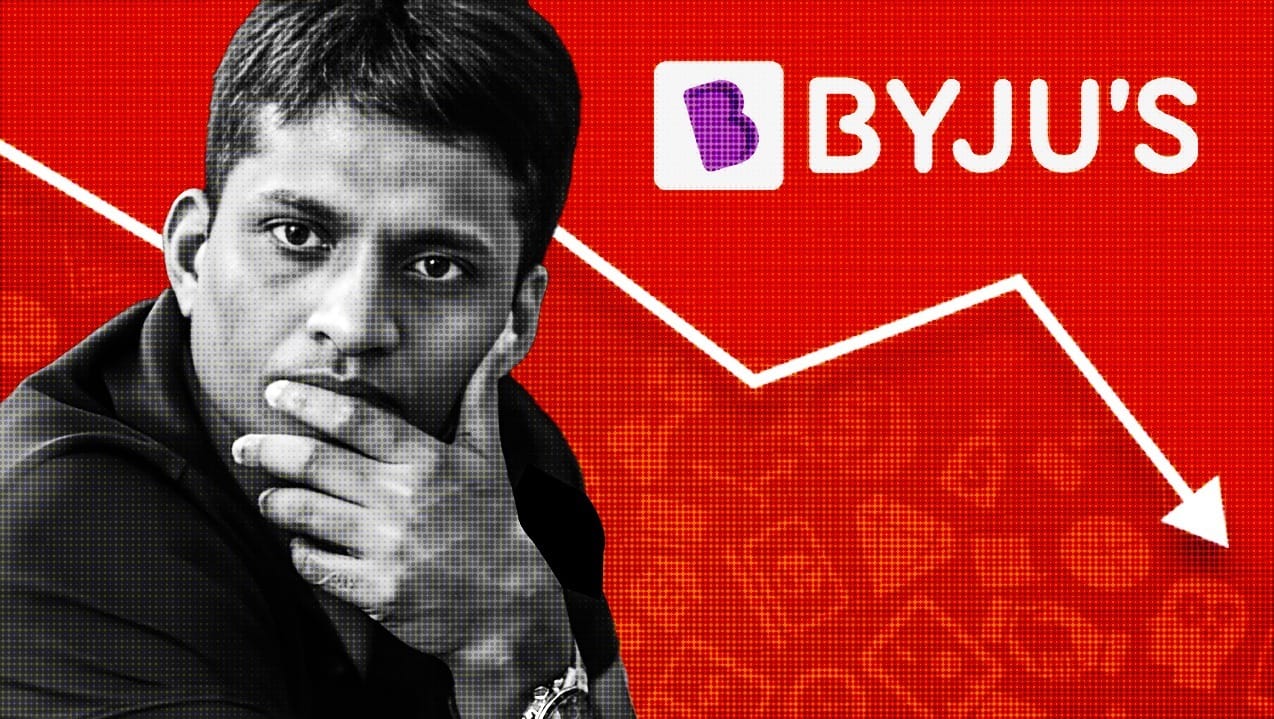
Ed-tech giant Byju’s is in the news once again after three of its board members handed in their resignations. The three members were representatives of venture capital firms Peak XV Partners, Prosus and the Chan Zuckerberg Initiative. This development comes when Byju’s is already caught in court cases with lenders, loan defaults, and delayed filing of its financial results. Previously, Deloitte, an international accounting firm, resigned as the company’s financial auditor after it found several irregularities in Byju’s finances (Read our previous coverage on Byju’s here).
Why does it matter?
India is the second largest market for e-learning after the US. It’s currently valued at $6 billion and expected to grow to $10.5 billion by 2025, according to an estimate by Blume Ventures. Byju’s, India’s largest ed-tech company, faces legal disputes over a $1.2 billion term loan in the US. According to the ASK Private Wealth Hurun Indian Future Unicorn Index 2023, India added only three unicorns in 2023. For 2022, the figure was 24. Amid these developments, many are worried about the future of the Indian-ed tech startup ecosystem.
What are the arguments from both sides?
Side 1: It will affect the Indian ed-tech startup ecosystem:
Destruction of reputation: Byju’s fiasco will scare big global investors of Indian startups. If the most valued startup in the ed-tech sector delays its financial details and defaults on loans, it might raise a red flag for anyone planning to invest in Indian startups.
Government regulations: Byju’s competitors also worry that following the series of developments with Byju’s, the government might start regulating the ed-tech sector like the Chinese government did two years ago. In 2021, the Chinese government banned out-of-school learning outfits from earning money and all foreign investments in the sector. Though the Indian government is less likely to take such severe measures, any form of regulation from its side will threaten the autonomy of the ed-tech companies, eventually stunting their growth.
It will trigger consolidation and layoffs in the sector: Byju’s has been on an acquisition spree, buying up several domestic and international ed-tech companies in the past few years. However, some of these deals have been fraught with challenges, such as the integration of WhiteHat Jr, which faced allegations of misleading marketing and poor quality of service 3, or the delayed payments to Aakash Educational Services, which led to a dispute between the two parties. Byju’s has also laid off about 3000 employees in the past year, citing performance issues and business realignment. These moves could indicate that Byju’s is facing financial and operational difficulties and is trying to cut costs and streamline its business. This could hurt the sector, reducing competition, innovation and employment opportunities.
Side 2: It will NOT affect the Indian ed-tech startup ecosystem:
Market cycle: Though investment in ed-tech startups has dropped, things might not be the same forever. Market forces can catapult and the startups might see a brief funding boom, helping them set their finances in order.
The competitors: The downfall of a single company doesn’t mean the downfall of the entire ecosystem. Other ed-tech startups like Unacademy, Vedantu, and Toppr could benefit from the public erosion of trust in Byju’s and innovate their products and services to capture the market. This means that the ecosystem will continue to thrive in one way or another.
India’s potential: Despite all recent developments, one can’t ignore that India’s potential remains compelling. It has a sizeable market, high-quality founders, and the startups have shown prompt integration of technology in their operations. The ed-tech startups like Byju’s are at a nascent stage of building out the market and testing different business models. The ed-tech startup ecosystem needs the right people to tap into India’s unrealised potential.
What’s next?
Byju’s is currently in the process of raising $1 billion from new prospective shareholders. It seeks to close the round within two weeks. The success of this fundraising round will help founder Byju Raveendran retain his control over the company. In a virtual meeting held on June 29th, Raveendran assured his employees that things weren’t as bad as they had been reading in the media and also promised to liquidate non-core assets if the company failed to secure funding.
NOTE WORTHY 📑
Did you know denims have an Indian connection?
Do you speak two languages? Check out the benefits of a bilingual brain!
How organized fandoms powered the RRR juggernaut.
SHARE THIS VICHAAR 🙌

If you enjoyed reading my newsletter, please consider sharing it with your loved ones.
Was this forwarded to you? Sign up here.
If you want to give us feedback, Click here.
Read our previous newsletters here
Reply