- Soch Vichaar
- Posts
- India-Myanmar border unrest
India-Myanmar border unrest

Mohak Mangal
November 17th, 2023
What happened?
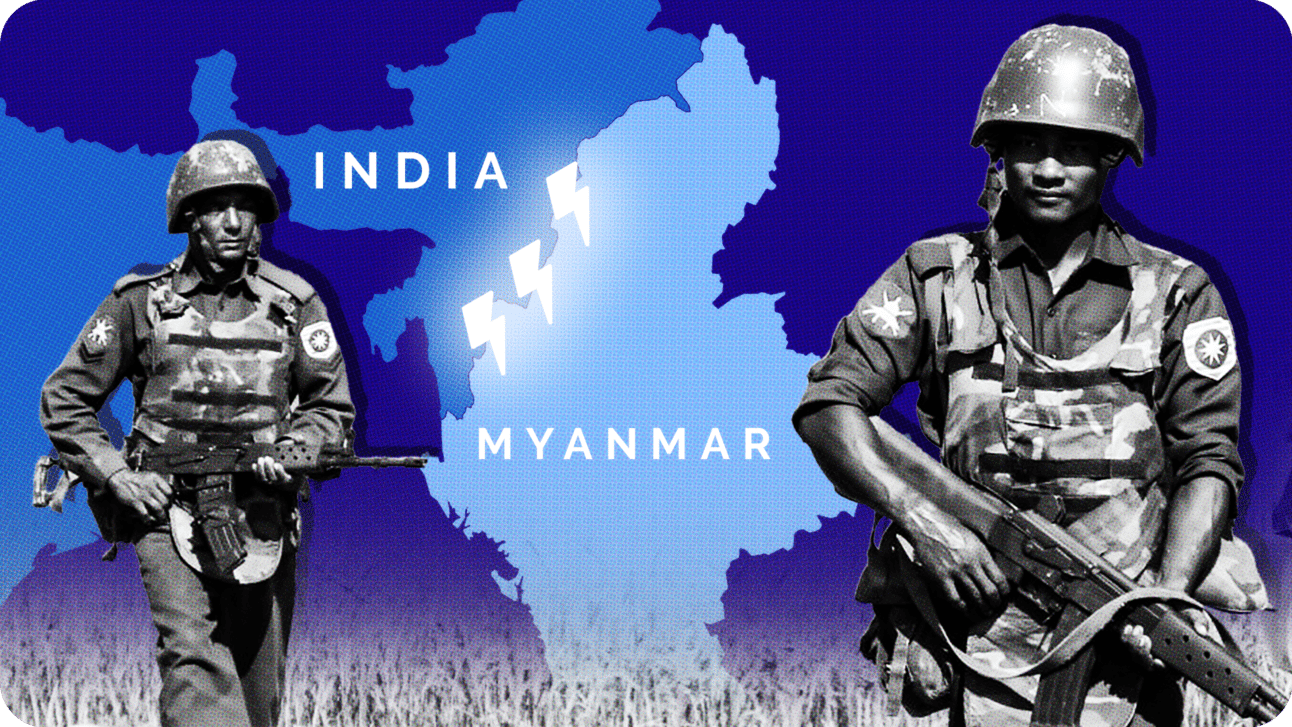
Intense fighting has taken place between Myanmar's rebel groups and the military government (junta) near the border with India. The rebels are targeting military positions and trade routes with China and India. Reports state that over 5,000 Myanmar nationals and 40 soldiers have escaped to Mizoram.
This resistance is the biggest challenge faced by the junta, which overthrew the democratic government of Aung San Suu Kyi in Myanmar in 2021.
The Ministry of External Affairs (MEA) has expressed deep concern and called for the "return of peace, stability, and democracy in Myanmar.”
Why does it matter?
Refugee crisis and national security: The UN stated that about 90,000 people have been displaced due to the conflict in Myanmar. And around 31,364 Myanmar nationals are living in camps in Mizoram, according to the state Home Department.
In India, there's concern about potential ethnic tensions because of cultural ties between the Chin community in Myanmar, the Kukis in Manipur and Mizos in Mizoram. Moreover, the presence of Meitei militias in Myanmar, reportedly supported by the junta, adds complexity. Myanmar's conflict could spill into India, already affected by Kuki-Meitei tensions in Manipur.
Defence and regional connectivity: The Ministry of Defence emphasized the importance of peace in Myanmar for India. Given the limited military infrastructure, border security is crucial due to the vulnerable terrain of the India-Myanmar border. Military cooperation has aimed to control separatist groups, but with the weakening junta, such groups are emerging again.
India has additional interests, like the Kaladan multimodal project connecting India and Myanmar, which will enhance trade with Southeast Asia.
Smuggling: The crisis in Myanmar has led to increased smuggling along the 510-km porous border with Mizoram. There's been an increase in the seizure of illegal drugs, exotic animals, and weapons. The amount of methamphetamine pills seized went up from 9 kg between 2015 and 2018 to 377 kg from 2019 to 2022, according to a narcotics official.
Geopolitics: India has a close relationship with Myanmar's military despite international criticism. It provided significant military support worth $51 million in arms. This is because India worries about China's influence and wants stability along its border.
China supports Myanmar's junta and is a significant arms supplier. India is concerned about China possibly building a surveillance facility on Myanmar's Coco Islands, near India's Andaman and Nicobar Islands. This facility could help China monitor Indian defence installations along the Bay of Bengal.
However, India's association with the junta could hurt its standing among Myanmar's population due to the unpopularity of the military regime.
What's next?
MEA Spokesperson Arindam Bagchi said India is facilitating people who want to return to Myanmar. And as the military loses power, India needs to adjust its strategy towards Myanmar. It should reach out more actively to the pro-democracy forces.
Dose of Positivity
Coca-Cola's green win at India's World Cup
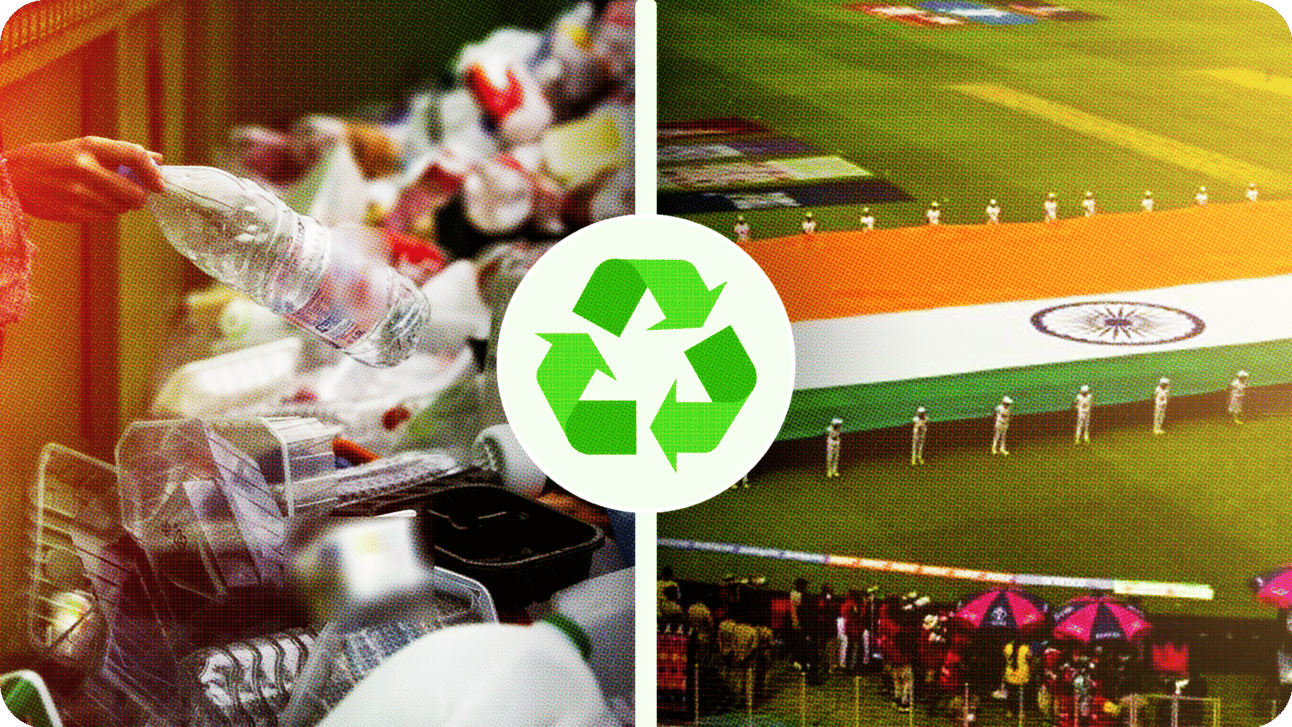
For the ICC Men's Cricket World Cup 2023, Coca-Cola India made national team flags and ICC Unity flags from recycled PET bottles. They turned those plastic bottles into yarn and used it to create the flags. These flags are part of the National Anthem Ceremony in each match.
Around 11,000 PET bottles were used for each national flag and approximately 2,000 bottles for an ICC Unity Flag. This initiative marked Coca-Cola as the first company globally to bring recycled PET national flags to cricket matches, setting an inspiring example for future sporting events.
Over 1000 volunteers wearing safety jackets made from recycled PET bottles worked across the ten stadiums hosting the World Cup matches throughout the tournament. They educated spectators on proper waste separation, ensured that waste went into the correct bins, and left the stadiums clean.
As part of their #MaidaanSaaf campaign, Coca-Cola facilitates waste management by installing reverse vending machines to dispose of used PET bottles at all stadiums. This initiative aligns with Coca-Cola's global commitment to creating a World Without Waste.
Bonus Section
Punctuality pays: Mastering the clock

Have you ever woken up sweating from a nightmare about being late for a final exam? If yes, you're not alone. Consider these steps to be more punctual:
Ellen Hendriksen, a psychologist, suggests you change the way you think about time. Say you have to be at the restaurant by 7:30. Instead of thinking, "I need to be in the restaurant at 7:30," try, "Dinner starts at 7:30." This mental tweak accommodates those underestimated tasks like finding the matching shoes, parking, walking etc. that often throw off our estimates.
Arrive 10 minutes early: If you aim to reach an event at the exact time it starts, you have a very tight arrival window. Rather, plan to be there at 11:50 for a noon event, leaving you a 10-minute window. Or, as a rule of thumb, whenever you plan to go somewhere or do something, add 25% more time to your estimate. For instance, if your commute usually takes 30 minutes, prepare for 40 minutes. This will spare you from those late-entry apologies.
Furthermore, learn to keep your schedule more realistic, and your stress levels will thank you.
NOTEWORTHY 📑
Iceland on alert: 800 earthquakes in 14 hours!
Why your coffee may soon taste different
International Men’s Day- Meet six men breaking ‘Mard’ stereotypes
The most devastating asteroid to hit Earth
What China's Xi gained from his meeting with Biden
SHARE THIS VICHAAR 🙌

If you enjoyed reading my newsletter, please consider sharing it with your loved ones.
Was this forwarded to you? Sign up here.
If you want to give us feedback, Click here.
Read our previous newsletters here
Reply