- Soch Vichaar
- Posts
- Menstrual Leave Policy: Can it be a Reality?
Menstrual Leave Policy: Can it be a Reality?

Mohak Mangal
December 19th, 2023
What happened?
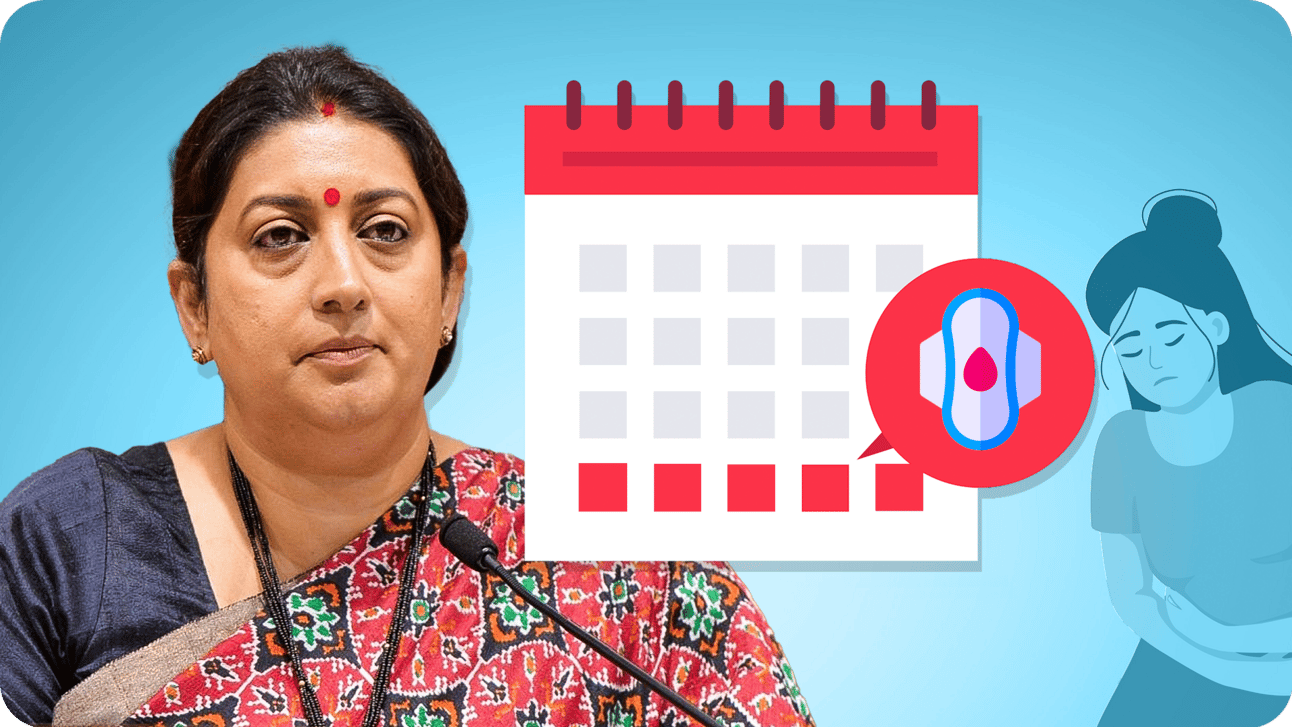
Union Minister Smriti Irani sparked controversy as she opposed the idea of mandatory paid menstrual leave for women, stating that menstruation is a natural part of life and shouldn't be considered a 'handicap.'
Instead, she emphasised the need to create a supportive environment for menstrual hygiene and educate men and boys on the issue. The Centre has already implemented a scheme for promoting menstrual hygiene among girls aged 10-19.
Why does it matter?
Misinformation, superstitions, and poor access to sanitation facilities depict the country's neglect. Menstruating women face societal restrictions like entering the kitchen or attending religious activities, as they are considered impure.
Notably, the concept of menstrual leave is not new to India. A school in Kerala has allowed students to take time off during periods since 1912. In Bihar, working women have been entitled to two days of paid leave for menstrual reasons since 1992.
While there is no nationwide law on menstrual leave in India, certain companies like Swiggy, Zomato, and Byju's have voluntarily adopted such policies, contributing to a broader movement for inclusive workplace practices.
What are the arguments from both sides?
Side 1: In favour of the menstrual leave policy:
Article 15 of the Constitution prohibits discrimination, allowing the state to make special provisions for women and children. The 'Right of Women to Menstrual Leave and Free Access to Menstrual Health Products Bill, 2022' proposes three days of paid leave for women and transwomen, with plans to extend the benefit to students. Research cited in the bill reveals that about 40% of girls miss school during periods, which affects almost 65% of their daily activities!
Bharat Rashtra Samithi's leader, K. Kavitha, emphasised that menstruation is not a choice but a biological reality. Denying paid leave disregards the genuine pain several women face. She urged the Government to bridge the gap between policy-making and reality with empathy and reason.
Dr Sudha Shashwati, a workplace gender behaviour expert, asserts that employees who feel valued will likely compensate for the leave taken once they are back.
Side 2: Against the menstrual leave policy:
There's a prevailing culture of men questioning the credibility of women taking menstrual leave, dismissing it as a "privilege" or "another advantage of being a woman." Managers may hesitate to include women in their teams or pay them less, perceiving them as less reliable due to potential sudden leaves. As per ILO, this issue is critical given India's poor female labour force participation, standing at 19.1% in 2021.
Ghazal Alagh, co-founder of Mama Earth, suggested that implementing period leave policies could undermine progress towards gender equality. Instead, she proposed work-from-home options as a more inclusive alternative.
What's next?
The Health and Family Welfare Ministry is drafting a national policy to enhance awareness and access to proper menstrual hygiene practices. The Government also provides pads for Rs 1 under the Jan Aushadhi scheme.
Dr Surbhi Singh, a gynaecologist, explained that every woman experiences menstruation differently, with some even requiring hospitalisation! Thus, developing a uniform policy would be difficult.
Un-charted
India's nutrition struggle
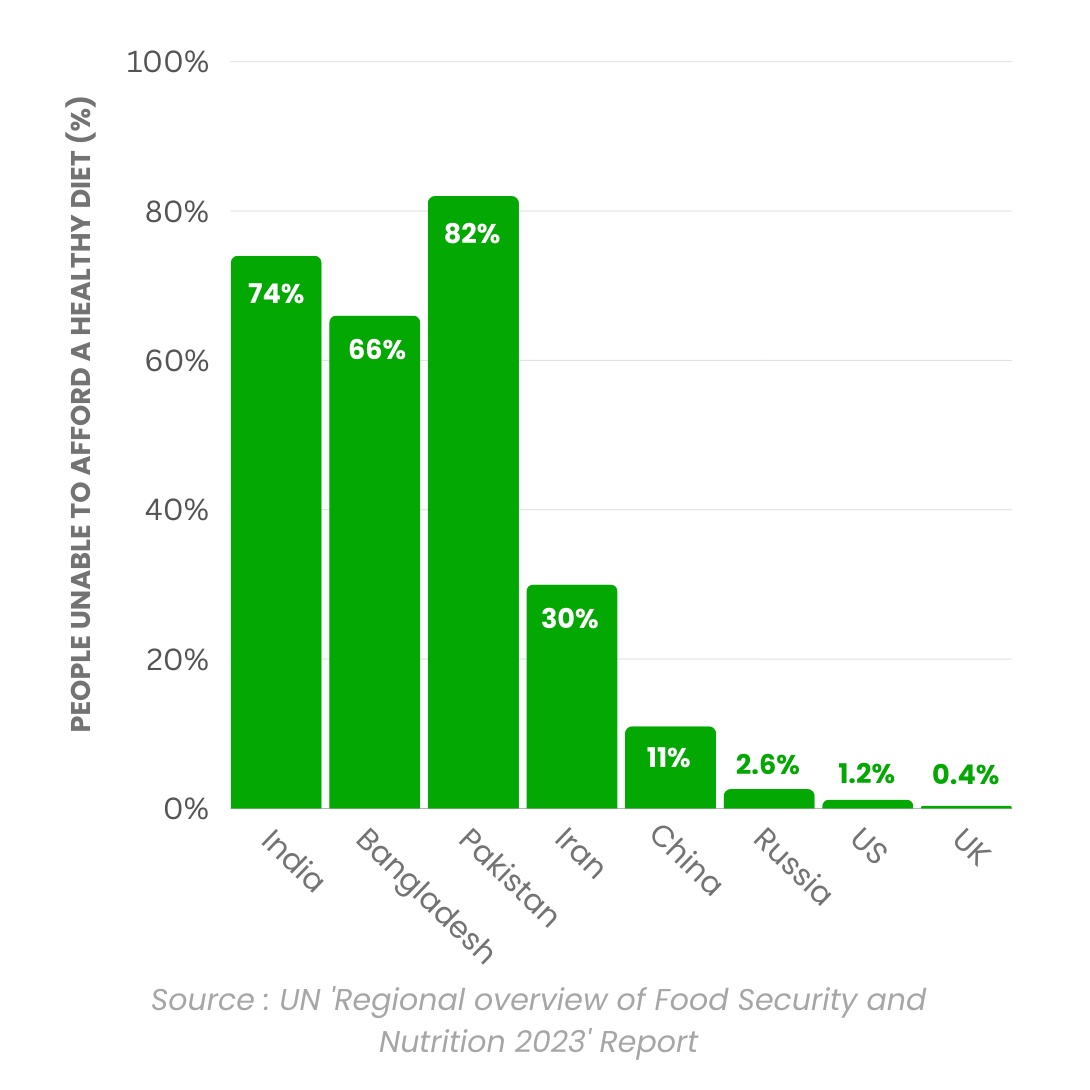
This chart reveals that in 2021, 74% of Indians (approximately 1.04 billion) couldn't afford a healthy diet. It's a slight improvement from 76% in 2020. The UN report estimated that from 2020 to 2022, 16.6% of India's population suffered from undernourishment. In 2019, 53% of women aged 15 to 49 in the country had anaemia, the highest prevalence in the region. Similar figures were highlighted in the Global Hunger Index 2023. Still, the government criticised it for using biased methodology and a small sample size.
A study based on the National Family Health Survey 2021 found that over 40% of women in the poorest 20% of households, including pregnant women, did not consume dairy products. Additionally, more than 50% of women and 40% of men across the country lacked Vitamin A-rich fruits in their diets.
Undernutrition hampers the economy by lowering labour productivity and affecting cognition and education- an integral part of India's commitment to achieving the UN's Sustainable Development Goals.
According to the report, a combination of the COVID-19 outbreak and a lack of decent job opportunities and uncertainties in agriculture and markets intensified the inequalities. This has a greater impact on poorer families.
Bonus section
Your guide to building stronger networks

Creating meaningful connections at the right time can be the key to boosting your career. Here are some tips you can follow:
Give more than you take: If you're good at solving problems, people will see you as someone with solutions. This increases the chances of them introducing you to others or offering help.
Join industry gatherings or online groups: Attend conferences, workshops, or LinkedIn groups where professionals in your field share ideas. Instead of trying to meet many people, focus on having quality conversations with a few. Be curious- ask about what matters to them, listen actively and share your interests.
Email etiquette: While social media is crucial, a well-crafted email is still powerful. Keep it short, easy to read, and focused on the recipient. Research beforehand and personalise your email to mention shared contacts or specific achievements that caught your eye.
Always follow up afterwards, mentioning something interesting you learned from them. Remember, networking is an ongoing process!
NOTEWORTHY 📑
How does Starlink Satellite Internet work?
Bhutan plans a green city along Assam
Why being bored is a good thing
EU probes Musk's X for potential social media law breaches
Ninjas: How Japanese spies evolved into pop culture heroes?
SHARE THIS VICHAAR 🙌

If you enjoyed reading my newsletter, please consider sharing it with your loved ones.
Was this forwarded to you? Sign up here.
If you want to give us feedback, Click here.
Read our previous newsletters here
Reply