- Soch Vichaar
- Posts
- Military Coup Against Putin?
Military Coup Against Putin?

Mohak Mangal
June 27th, 2023
What happened?
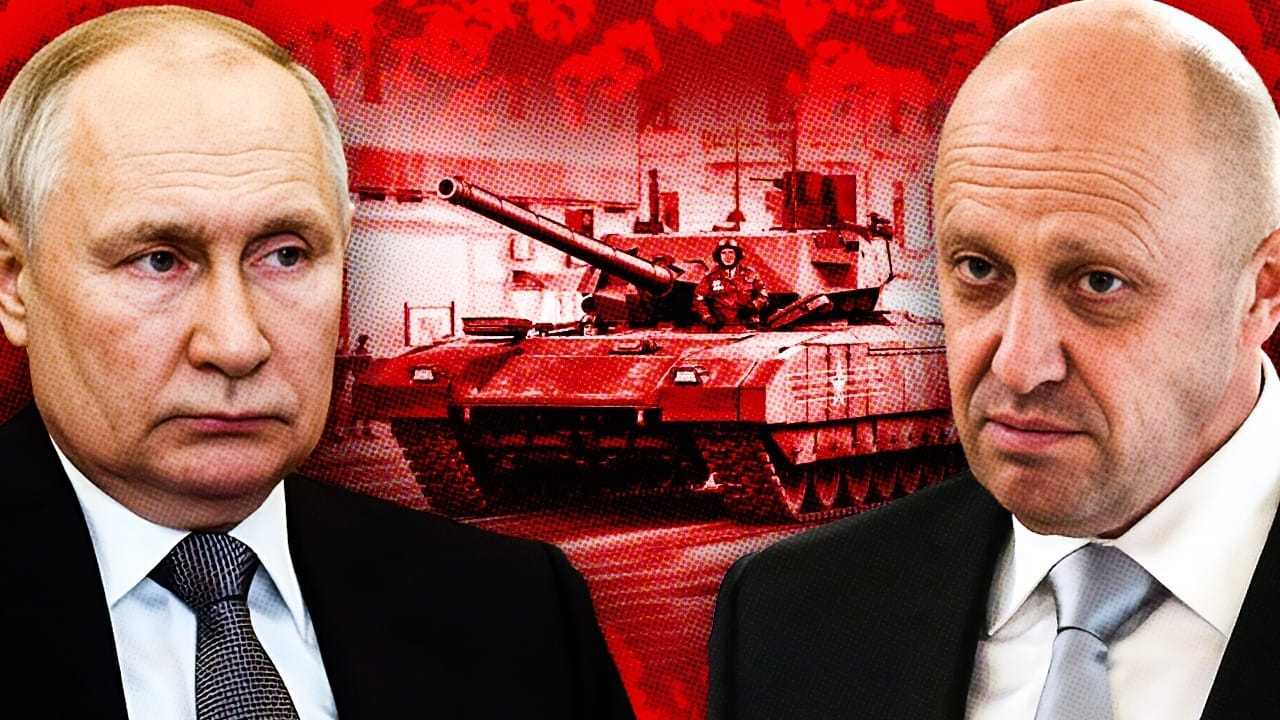
On June 23, 2023, a Russian private military company called the Wagner Group, led by Yevgeny Prigozhin, a close ally of President Vladimir Putin, launched a rebellion against the Russian government. Prigozhin claimed that his forces were attacked by the Russian Ministry of Defense and accused Defense Minister Sergei Shoigu of pursuing the war in Ukraine to benefit Russian oligarchs.
The rebellion led by Prigozhin's forces began by seizing control of Rostov-on-Don and the Southern Military District headquarters. They then started advancing towards Moscow in an armoured column. However, on June 24, Putin denounced the actions of the Wagner Group as treason and vowed to suppress the rebellion.
Why does it matter?
The Wagner rebellion had significant implications as it challenged Putin's authority and legitimacy in an unprecedented manner. It exposed deep divisions within the Russian security establishment and revealed dissatisfaction with Putin's handling of the war in Ukraine. Additionally, it raised concerns about Putin's control over his loyalists and his ability to maintain stability and order in Russia. The rebellion could have far-reaching effects on Russia's domestic politics, foreign policy, and regional security.
What are the arguments?
Side 1: Putin is WEAK:
Prigozhin managed to mobilise a large number of armed mercenaries and initiate a rebellion without being detected or stopped by Russian intelligence or security services. This suggests that Putin may have lost control over his power base, and some elements within the security apparatus may be complicit or indifferent to Prigozhin's actions.
Prigozhin capitalised on public discontent and frustration regarding the war in Ukraine, which has resulted in significant casualties, economic sanctions, and international isolation for Russia. He tapped into widespread resentment towards the corruption and cronyism of the Russian elite, who are perceived as benefiting from the war at the expense of ordinary Russians.
Prigozhin forced Putin to negotiate through a third party, Lukashenko, who has had a love-hate relationship with Putin. This demonstrates that Putin has lost leverage and influence over his former allies, leaving him isolated and vulnerable on the international stage.
Side 2: Putin IS NOT Weak
Prigozhin failed to achieve his objectives and had to retreat under pressure from Putin's loyal forces. He faced widespread condemnation and rejection from most Russian political and social factions, who rallied behind Putin as the legitimate leader of Russia.
Prigozhin overestimated his popularity and support among the Russian people, who generally remain patriotic and supportive of Putin's stance on Ukraine. He also underestimated Putin's determination to defend his power and sovereignty against internal and external threats.
Prigozhin miscalculated his chances of success and underestimated the risks and costs of his rebellion. He alienated his former patron, Putin, who will likely seek revenge and punishment for his betrayal. He also invited the wrath of the international community, leading to potential additional sanctions and pressure on him and his business interests.
What’s next?
After negotiations with Belarusian President Alexander Lukashenko, Prigozhin agreed to stand down and withdraw from Rostov-on-Don. Thirteen Russian military servicemen lost their lives during the rebellion, while two Russian military defectors fighting on Wagner's side were also killed. A Kremlin spokesperson said that the criminal case opened against Prigozhin for organising armed insurrection had been dropped, and his troops wouldn’t face any charges. Prigozhin has left Russia for Belarus.
PM Modi’s US state visit: What happened?
What happened?
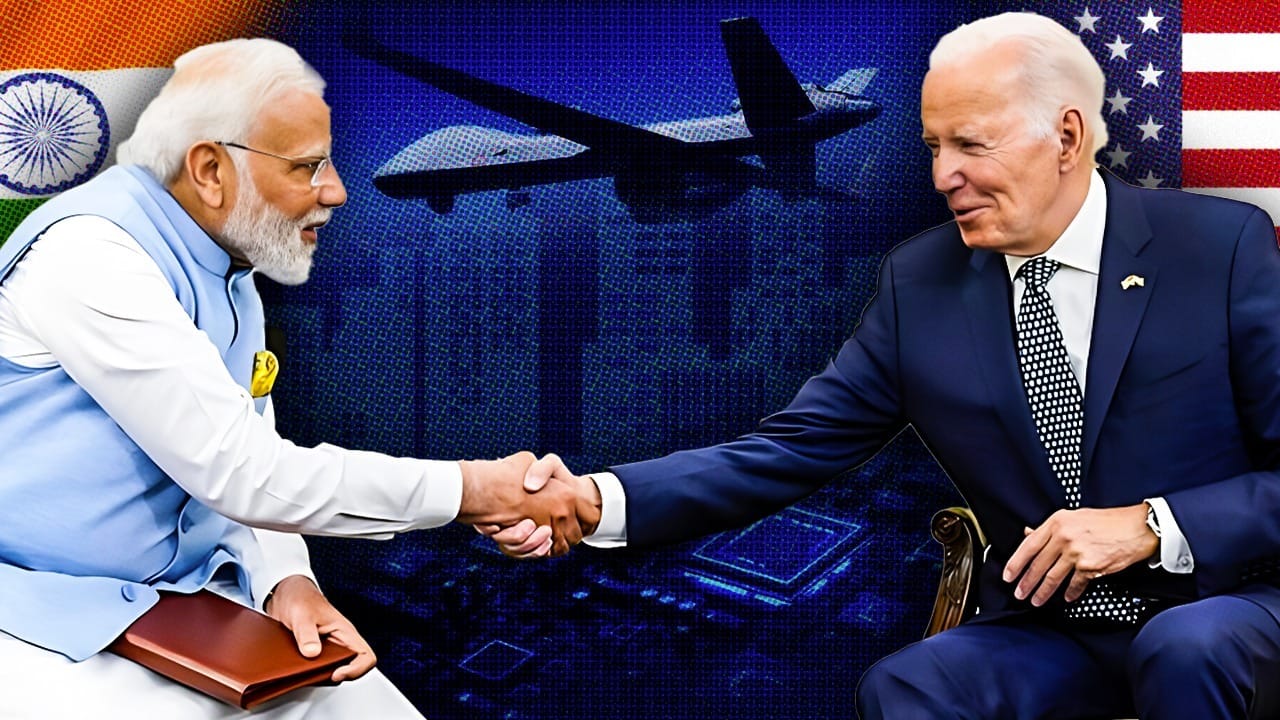
Prime Minister Narendra Modi was on his first state visit to the US at the invitation of President Biden and First Lady Jill Biden from June 21-24. During this four-day visit, Modi held bilateral talks with President Biden, interacted with leaders from diverse fields, led International Yoga Day celebrations at UN headquarters, and addressed the US Congress.
Why does it matter?
State visits are the highest-level foreign visits to the US by a head of a state. They are rare and signify the importance the US places on its relationship with the visiting nation. President Biden has held only two state visits before PM Modi–one for France’s President Emmanuel Macron and the other for South Korea’s President Yoon Suk Yeol.
Moreover, the visit is seen as a milestone in the India-US relations. India and the US are the world’s largest and one of the oldest democracies. The US is a global economic superpower. India is the fifth largest economy. Experts have been hinting at India’s phenomenal growth in the 21st century. Hence, closer ties between the two nations will change the global economic and political landscapes.
What are the arguments?
Side 1: The visit was amazing!
Increased defence cooperation: The state visit resulted in both countries signing a $3 billion deal for 31 High Altitude Long Endurance (HALE) Unmanned Aerial Vehicles (UAVs). Moreover, General Electric (GE), an American multinational corporation, signed an MoU with Hindustan Aeronautics Limited (HAL) to jointly produce fighter jet engines for the Indian Air Force. Both countries have also announced to make the Indo-Pacific region more resilient.
Resolution of trade disputes: India and the US decided to end six trade disputes at the World Trade Organisation (WTO) to boost two-way commerce and strengthen the economic ties between the two countries. Three of these disputes were initiated by India, and the others by the US. Most of these were concerned with increased import duties on products exported by the other country.
Partnership in technology: Affirming the role of technology in deepening the ties between the US and India, the two leaders launched two task forces which will oversee research and development in the 5G/6G technologies. Moreover, Micron Technology, Inc., an American semiconductor chip manufacturer, announced that it would invest up to $825 million in a new chip assembly and test facility in Gujarat.
Side 2: The Visit did NOT go well:
Backlash by the foreign media: A Times article called India an ‘unreliable ally’ for the US due to ‘India’s worsening democracy’. CNN was quick to point out that Modi had once been banned in the US for “severe violations of religious freedom” and was now embraced by the US. Other media outlets expressed how the US has been ‘courting’ India as a ‘strategic bulwark against an advancing China.’ Thus, the US’s move can be seen more as a warning to China than an honour to India.
Criticism over human rights issues: While PM Modi was visiting the US, former US President Barak Obama expressed concerns over the protection of rights of ethnic minorities in India during an interview with CNN. Moreover, 75 members of the US Congress signed a letter urging President Biden to raise concerns over the growing religious intolerance, curbs on freedom of the press and erosion of human rights in India. Two members even boycotted PM Modi’s address to the US Congress.
Criticism back home: Back home, the opposition has criticised PM Modi for maintaining a ‘stoic silence’ on the Manipur situation and for his lack of accountability on the matter. He hasn’t visited Manipur even once since the ethnic clashes erupted. Meanwhile, he made trips to five nations–Australia, New Papua Guinea, Japan, the US, and Egypt. Meanwhile, speculative reports arose in social media suggesting that the US sold the drones to India at a higher price.
What’s next?
PM Modi’s visit to the US has been dubbed by many as ‘historic’. Most outcomes of the visit hint at India and the US’s desperation to counter China’s dominance in Asia. The Chinese State media criticised the visit by saying the US displays ‘wishful thinking’ regarding India’s potential.
After concluding his visit to the US, PM Modi flew to Cairo, Egypt, for a two-day visit (June 24-25). He was invited there for bilateral talks by Egyptian President Abdel Fattah El-Sisi.
The Gita Press controversy: Who is right?
What happened?
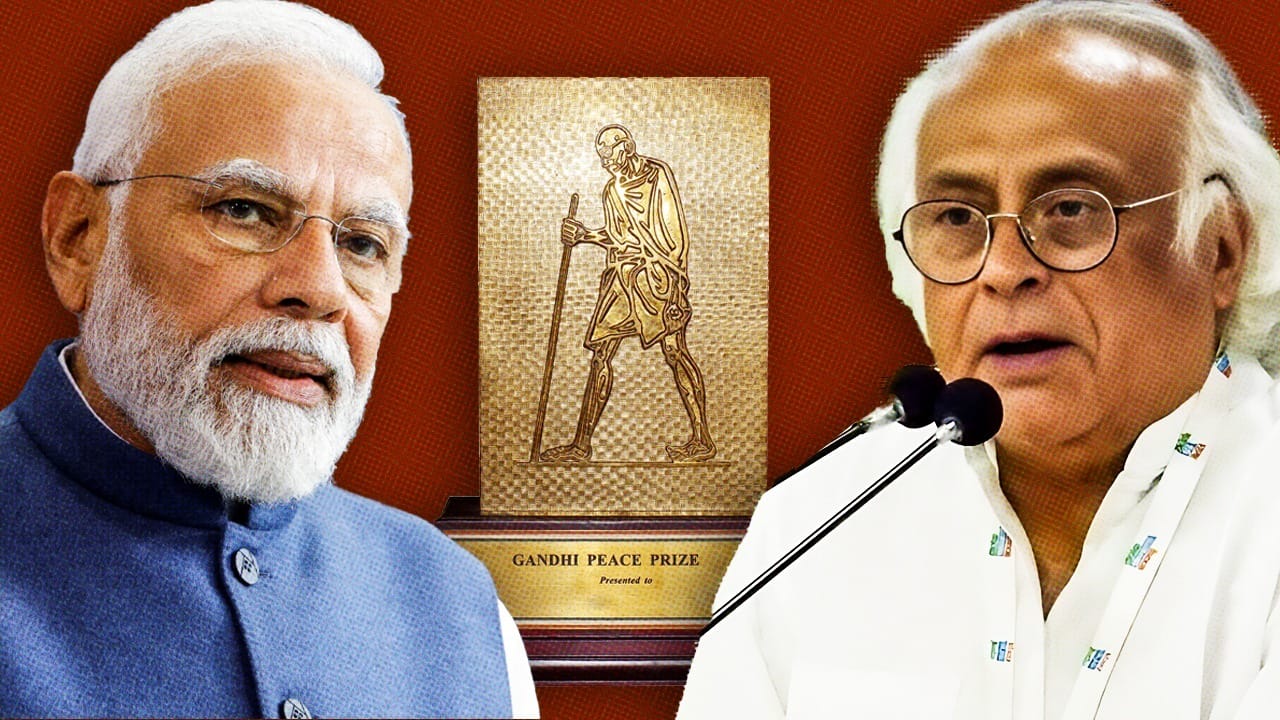
A jury headed by PM Narendra Modi conferred the 2021 Gandhi Peace Prize to Gorakhpur-based Gita Press, a century-old publication renowned for printing Hindu religious texts to promote the principles of ‘Sanatan Dharma’. A controversy erupted following the announcement of the prize on Sunday, with the BJP-led centre and Congress taking jabs at each other.
Why it matters?
The International Gandhi Peace Prize is awarded annually by the Government of India to a person or an institution for their “contributions towards social, economic and political transformation through non-violence and other Gandhian methods.” It has been previously awarded to the Former South African President and activist Nelson Mandela, the Indian space agency ISRO, and Ramakrishna Mission, a society founded by Swami Vivekananda.
What are the arguments?
Side 1: The Government is NOT wrong:
A cultural powerhouse of Hinduism: In its century-long existence, the Gita Press has printed over 40 crore books in 15 languages. It has made Hindu religious texts such as Shrimad Bhagwad Gita, Ramayana, Puranas, and Upanishads more affordable and accessible to the masses. Thus, its ‘contribution in bringing a transformation using non-violence means’, a merit required for the Prize, is indisputable.
Opposition leader in the jury: The awardee for the Prize is decided by a five-member jury comprising the Prime Minister, the Chief Justice of India, the leader of the largest opposition party in Lok Sabha, and two ‘eminent persons.’ Thus, the Prize isn’t awarded simply on the wish of a single political or ideological entity.
Politicisation by the opposition: With the conferment of the Prize to an organisation that promotes Hindu ideals, the opposition has found an opportunity to politicise the event and criticise the centre.
Side 2: The Government is Wrong:
Fuelling Hindu right-wing ideology: The Gita Press has been accused of promoting orthodox doctrines of the Sanatan Dharma. For instance, it’s known for propagating gender stereotypes and the ideals of the Varna system.
Stance on Gandhi’s assassination: Following Gandhi’s assassination, the Press allegedly maintained a ‘studied silence’. The founder and editor of the Gita Press were close to Mahatma Gandhi. But they soon developed differences on matters such untouchability of Dalits, the Poona Pact, etc.
Non-involvement of the opposition leader: Adhir Ranjan Chowdhury, the leader of Congress in Lok Sabha, alleged that he was kept in the dark regarding the decision of the Prize. He said he was not invited to any jury meeting and only learned about the prize announcement through the media.
What’s next?
The Gita Press has refused to accept the cash prize of ₹1 crore that comes with the Peace Prize. However, it will accept the honour along with a citation, a plaque, and an exquisite traditional handloom item. The Press will receive the award at a special ceremony in New Delhi, the date of which hasn’t been disclosed yet.
NOTE WORTHY 📑
What do expiry dates on food products really suggest?
Did an earthquake help preserve the Madhubani art?
The ‘profanity-free home’ campaign.
SHARE THIS VICHAAR 🙌

If you enjoyed reading my newsletter, please consider sharing it with your loved ones.
Was this forwarded to you? Sign up here.
If you want to give us feedback, Click here.
Read our previous newsletters here
Reply