- Soch Vichaar
- Posts
- MP Pee-Gate Incident
MP Pee-Gate Incident

Mohak Mangal
July 7th, 2023
Was the State Government’s Response Enough?
What happened?
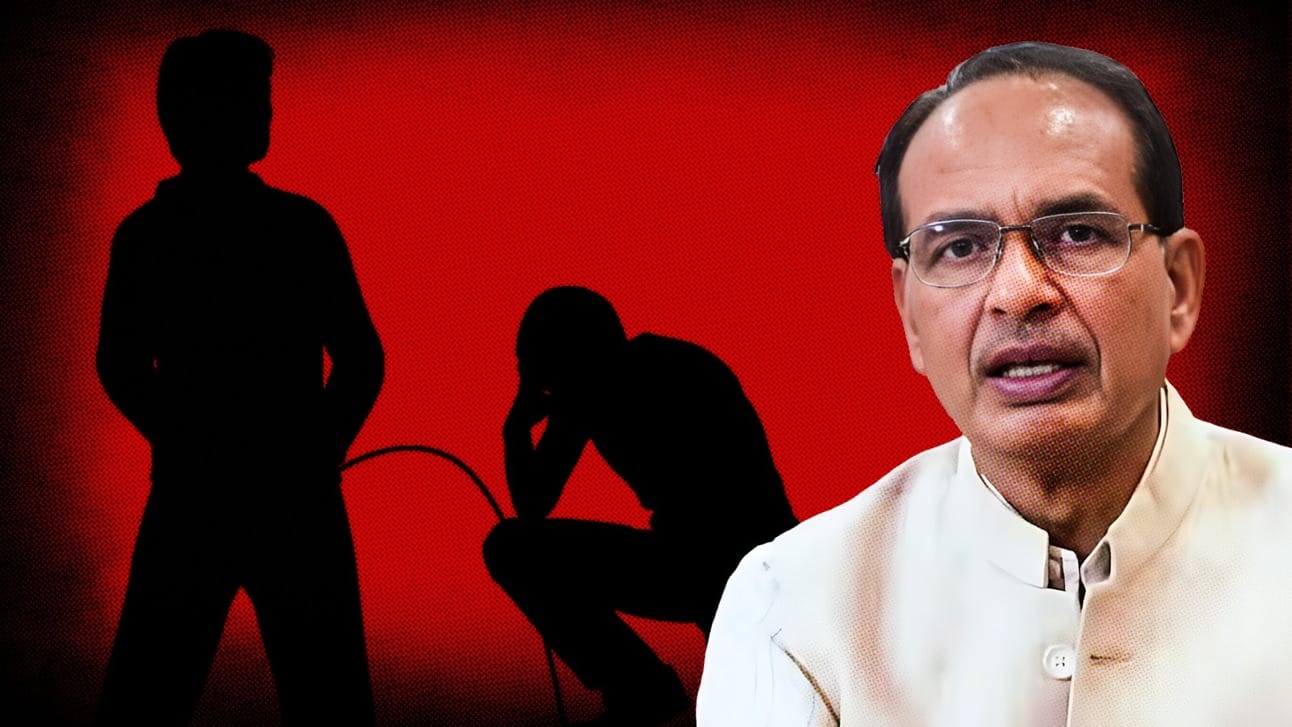
On July 4, a video showing a man urinating on a tribal labourer in Madhya Pradesh’s Sidhi district went viral on social media. The incident sparked outrage online. The accused, Pravesh Shukla, was arrested on Wednesday under the National Security Act (NSA) and SC/ST (Prevention of Atrocities) Act.
This incident also prompted a political war of words in the poll-bound state, with the Congress alleging that the culprit was an associate of a BJP MLA. However, the BJP denied the claim.
Why does it matter?
The urination incident is humiliating and inhuman. The fact that the victim was a tribal and the accused an upper-caste man makes it even more condemnable. Madhya Pradesh is home to 46 recognised Scheduled Tribes. The tribals constitute 21% of the state’s population. They enjoy significant electoral clout. However, incidences of violence against them remain to be a pressing issue in the state.
What are the arguments from both sides?
Side 1: The MP government’s response was enough:
Prompt Action: As soon as Chief Minister Shivraj Singh Chouhan learned about the video, he alerted the administration and imposed NSA on the culprit. Consequently, several police teams were dispatched, and the culprit, Pravesh Shukla, was arrested. Moreover, when the administration learnt about Shukla’s illegal encroachment, the concerned property was demolished.
CM’s response: The CM apologised to the victim and washed his feet to show the citizens that under his governance, the public is God. He even promised to punish the culprit most severely to set an example for the public. This shows the government’s concern about the crimes against the state's tribals.
Side 2: The MP government’s response was NOT enough:
Systemic issue: Reportedly, the urination incident took place two months ago. The government jumped to action only after the video went viral a few days ago. This shows that systemic barriers in the state led the victim to tolerate the crime without reporting it to the police.
Superficial approach: The MP government took a superficial approach to address the case. It resorted to demolishing the culprit's property to set an example for the public and correct its image in the public’s eyes. It’s unwilling to work towards eradicating the root cause of the problem–discrimination against the tribals.
What’s next?
Pravesh Shukla is currently in custody and awaits a trial. The police have also detained the two men who shot the video. They are currently being interrogated, and a case will likely be registered against them. The BJP-led government is trying not to let the incident smudge its image and affect its performance in the upcoming assembly elections.
SAFF Championship Win
Revival of Indian Football?

What happened?
On July 4, in a nail-biting thriller, India defeated Kuwait to win the 2023 SAFF Championship for the ninth time. The final match entered a penalty shoot-out following a 1-1 draw. Consequently, India scored 5 penalties against 4 from the Kuwaiti team. It was India’s second trophy on the trot after lifting the Intercontinental Cup just last month. Moreover, on June 29, India surpassed Lebanon and New Zealand and ranked 100 in the FIFA ranking.
Why does it matter?
India is home to some of the oldest football clubs in the world. At one time, the Indian national team was among the best-ranked teams in Asia. However, since the 1980s, Indian football has been going downhill. A country that’s home to more than 1.4 billion people has never played in the FIFA World Cup, arguably the biggest sporting tournament in the world. However, there is a growing belief that India will strengthen its international standing in football - the most widely followed sport in the world. Is it realistic, or another false dawn?
What are the arguments from both sides?
Side 1: Indian football is witnessing a revival:
Back-to-back wins: Before the recent SAFF win, India won the Tri-Nation International Football Tournament in May. These back to back wins were achieved by changing the team's playstyle–from longball tactics and focus on defense to increased ball possession and attack-first philosophy, a major contribution of the coach Igor Stimac.
Vision 2047: In January this year, the All India Football Federation (AIFF) announced a strategic roadmap titled ‘Vision 2047’. It consists of six four-year plans and aims to make India a new powerhouse of Asian football by 2047. Apart from other objectives, it intends to increase players' game time by ensuring they play at least 55 matches every season.
International support: Arsene Wenger, FIFA’s current chief of global football development, in January this year, said that he’d assist in the development of football in India. He helped send coaches from FIFA’s development task force to India to aid talent development. This shows that FIFA recognises India’s potential and is working towards bringing Indian football to the world stage.
Side 2: Indian football is NOT witnessing a revival:
Lakshya 2022: In 2012, the AIFF launched a roadmap called ‘Lakshya 2022’. It also made big promises like developing a national youth program, increasing competition for women at the state and district levels, etc. However, it failed to achieve most of its objectives. Many argue that ‘Vision 2047’ will match the same fate.
Lack of support at the grassroots level: There’s a lack of education and coordination at the state and district levels. AIFF’s plans fail to reach the bottom levels where the new talent could be found. At these levels, the organisational setups still remain highly unprofessional, hindering the growth of emerging players.
What’s next?
The Indian football team is now scheduled to play next in the 2023 King’s Cup. The tournament will be held in Thailand from September 7 to 10. Following that, India will participate in the high-stake AFC Asian Cup 2023 in Qatar.
NOTEWORTHY📑
Greywater recycling: Pune-based ex-engineer develops a cost-effective alternative.
Bhoota Kola: An ancient art form that inspired the film Kantara.
Check out this fascinating microscope footage of the Tardigrades—one of the most resilient organisms on Earth.
SHARE THIS VICHAAR 🙌

If you enjoyed reading my newsletter, please consider sharing it with your loved ones.
Was this forwarded to you? Sign up here.
If you want to give us feedback, Click here.
Read our previous newsletters here
Reply