- Soch Vichaar
- Posts
- No right to marry for same-sex couples (Yet)
No right to marry for same-sex couples (Yet)

Mohak Mangal
October 20th, 2023
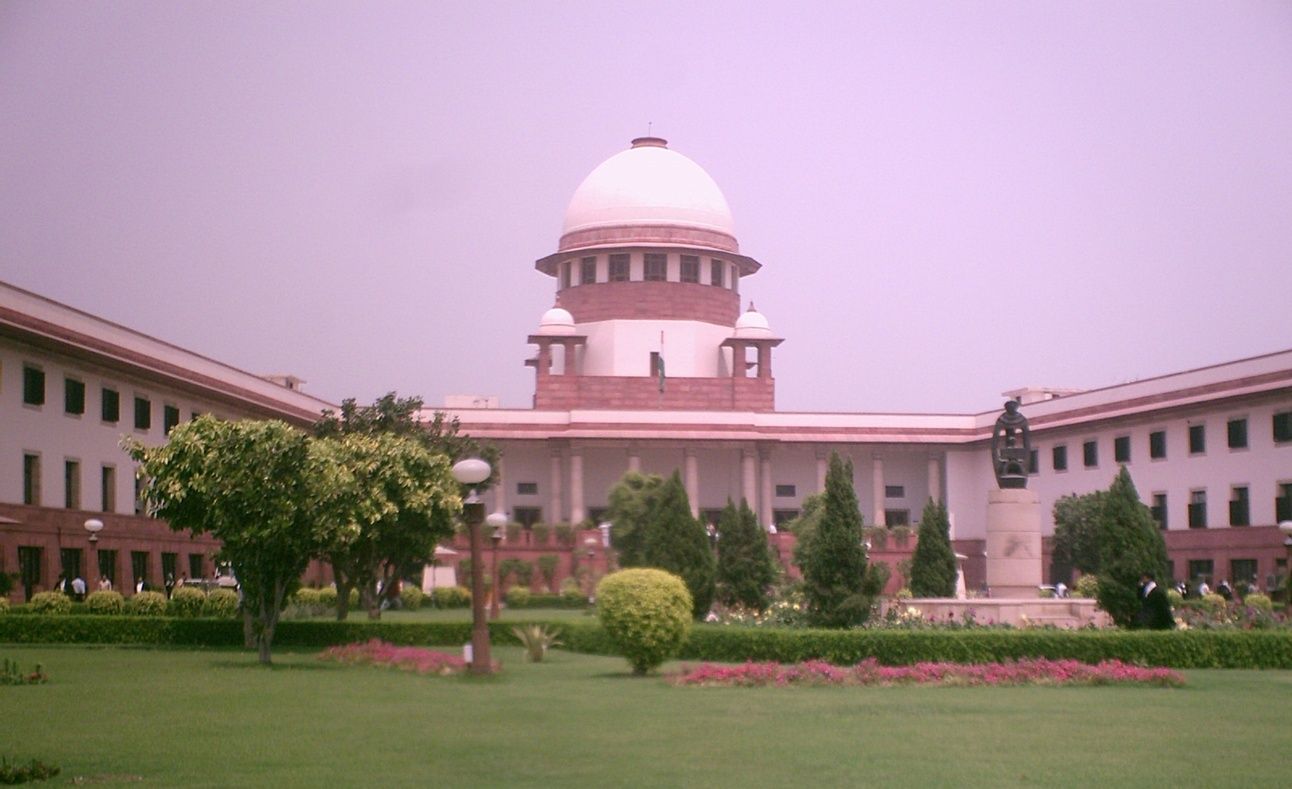
Image Courtesy: Wikimedia Commons
What happened?
A five-judge bench, led by Chief Justice DY Chandrachud, voted against legalising same-sex marriages in India. The petitioners aimed for a gender-neutral interpretation of the Special Marriage Act, a secular law designed for inter-caste and inter-faith marriages, to incorporate same-sex marriages as well.
SC handed over the task of legalising same-sex marriages to the legislatures, invoking the doctrine of separation of powers. The government also agrees that such a change must come from the Parliament.
Why does it matter?
More than 30 countries in the world have already legalised same-sex marriages. Many expected India to follow suit and ensure dignified lives for its queer citizens, who represent around 10% of the population based on some estimates. There is no recent government data to confirm these figures.
Following the landmark Navtej Singh Johar judgement (2018), which decriminalised homosexuality, and the KS Puttaswamy ruling (2017), which upheld the right to privacy, the next logical step was expected to be the expansion of rights to the queer community.
What are the arguments from both sides?
Side 1: In favour of the judgement:
SC was not abdicating its responsibilities when it argued that this substantial change should be enacted by the Parliament, with inputs from diverse stakeholders as it would have far-reaching societal implications.
Despite refusing to legalise same-sex marriages or civil unions, SC affirmed their right to choose a partner and cohabit. Judges upheld the right of transgenders in heterosexual relationships to marry under current personal laws.
Queerness is neither urban nor elite, the CJI stated in his judgement. In fact, India has always had an open attitude towards homosexuality, evident in the sculptures of temples of Khajuraho, the Kamasutra and Indian mythology. It was only decriminalised during British rule, owing to their orthodox beliefs.
The bench unanimously approved a high-powered committee to examine the concerns of same-sex couples. Additionally, the CJI directed the government to increase sensitisation about queer rights, establish a hotline and safe houses for the queer community, and ensure that intersex children are not forced to undergo surgeries. He issued guidelines for the police and hospitals to prevent harassment of queer individuals.
Side 2: In opposition to the judgement:
Petitioners were seeking the right to marry, as it encompasses legal recognition as spouses, access to financial, insurance and medical benefits, along with property, inheritance, and adoption rights.
For instance, such couples cannot jointly apply for an insurance policy or even a home loan!
SC missed the opportunity to provide the LGBTQIA+ community with the right to parenthood by denying them adoption under the Central Adoption Resource Authority (CARA) guidelines.
Opponents argue that the verdict denies them their constitutional rights. Some felt let down because the SC did not set a deadline for the committee to give its recommendations. Their goal was to attain greater social acceptance through legal means. However, the SC verdict fell short on this front and passed the buck to the Legislature.
What’s next?
The petitioners can ask for a judicial review of the verdict. Nonetheless, the judgement has led to a conversation over this subject among the public, which is a small win for the community.
Dose of Positivity
India, Sri Lanka resume ferry service

Image Courtesy: Wikimedia Commons
An international, high-speed passenger ferry service has recommenced between Tamil Nadu and northern Sri Lanka after 40 years. This is an effort to revive maritime links from the early 1900s, which were disrupted by the Sri Lankan civil war.
It is a significant milestone that will bolster people-to-people contact between the historically close neighbours. It will not only strengthen cultural and civilisational ties but also improve cooperation during times of disaster. And by reinforcing ties with Sri Lanka, India can enhance its influence in the Indian Ocean region.
It may also allow seamless voluntary repatriation of refugees from Sri Lanka, as India has always stood for the rights and dignity of Sri Lanka's Tamil minority.
The added affordability is likely to attract tour operators, enabling budget travellers from Tamil Nadu and other parts of India to explore distinguished places of worship in Colombo and southern Sri Lanka.
Going ahead, there are plans to further enhance linkages between the two nations through projects such as grid connections, pipelines, and economic corridors.
Bonus Section
How to use non-verbal communication effectively?

Non-verbal cues such as facial expressions, gestures, eye contact, and posture can say more than words. Darlene Price, founder of a consulting company specialising in high-impact presentations and effective communication, says that non-verbal cues can impact 65% and 93% more than spoken words.
Good eye contact communicates your level of involvement and interest. Finger-pointing, fidgeting, scratching, tapping, and playing with hair might be destructive.
By paying attention to the non-verbal cues of the other person, you can sense their emotional response and figure out if what you’re trying to convey is actually getting through.
Before you go, check out my video on same-sex marriage, where I covered the arguments from both sides in detail:
NOTEWORTHY 📑
How a village has become a hub of eco-tourism by caring for Olive Ridley turtles
The unique 'toy story' of an Assam-based designer
ISRO gearing up for the Gaganyaan mission
The easiest way to fight climate change?
Meet the engineer who is building an ‘Army’ of emotional support for Indians.
SHARE THIS VICHAAR 🙌

If you enjoyed reading my newsletter, please consider sharing it with your loved ones.
Was this forwarded to you? Sign up here.
If you want to give us feedback, Click here.
Read our previous newsletters here
Reply