- Soch Vichaar
- Posts
- Opposition boycotts 14 news anchors
Opposition boycotts 14 news anchors

Mohak Mangal
September 15th, 2023
What happened?
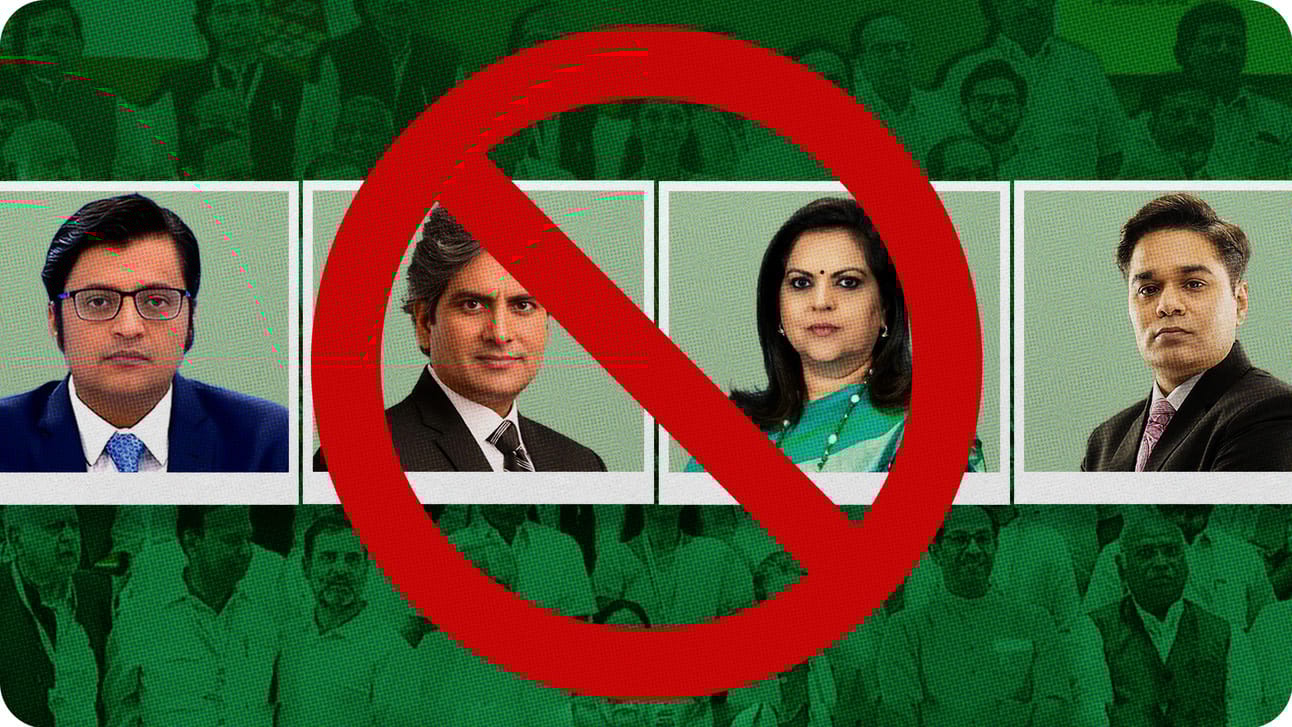
On September 14, the INDIA alliance released a list of 14 TV anchors, boycotting them for conducting ‘hate-filled’ news debates. The list includes prominent journalists such as Arnab Goswami of Republic Bharat, Sudhir Chaudhary of Aaj Tak, Navika Kumar of Times Now, and Amish Devgan of News18.
What are the arguments from both sides?
Side 1: INDIA alliance and supporters of the move:
Communal coverage: Several TV news channels have been routinely accused of spreading hate and intensifying communal tensions in the country. In 2022, the Supreme Court flagged the visual media as the ‘chief medium of hate speech’. The boycotted anchors have allegedly fuelled communalism through the debates they host.
Ethics of journalism: The anchors claim that they’re doing their job, and as journalists, they have a right to ask questions. They’re protecting themselves using the same ethics that they’ve tarnished for a long time. They’ve run news without fact-checking and often given a communal spin to the news stories. In this situation, it’s hypocritical for them to invoke the ethics of journalism.
Side 2: BJP and opponents of the move:
Anti-democratic: The Opposition’s move has set a dangerous precedent for the discourse and debate in our country. News anchors, just like ordinary citizens, have the right to express their ideas and opinions. Moreover, the move is in line with the Congress-led government's action during the time of Emergency. It censored and suppressed the media.
Suppression of press freedom: The Opposition is trying to shrink space for journalists. The Opposition speaks about press freedom and doesn’t spare a moment to accuse the Centre of suppressing the media. But with the boycott, it strengthens that which it claims to oppose–the threat to press freedom.
What’s next?
The representatives of the alliance will not appear in any of the shows hosted by these anchors. A committee member of the bloc also suggested that in case of no improvement, measures like a ban on advertisements for these channels can also be adopted.
Un-charted
Kerala on High alert as Nipah spreads
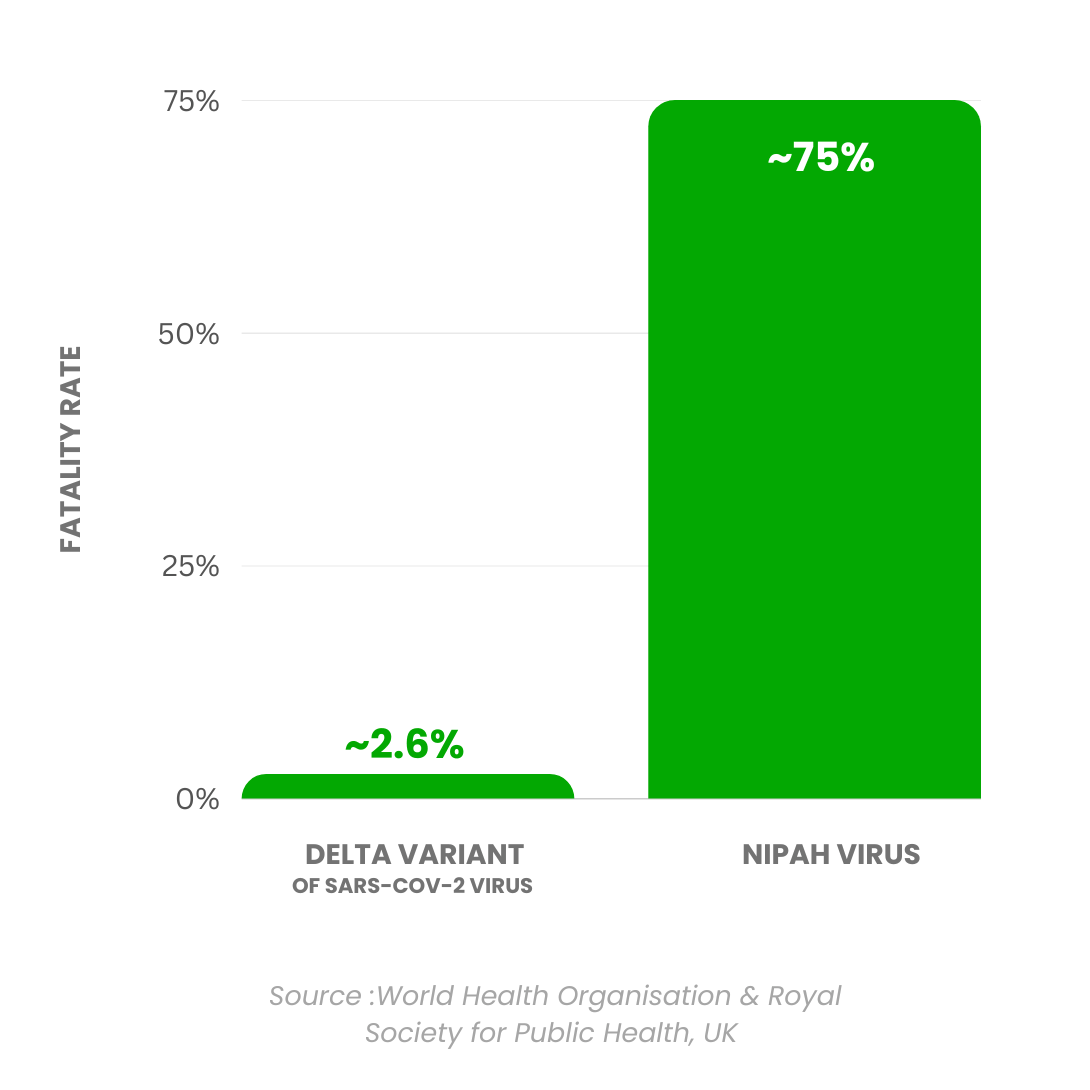
This chart compares the fatality rate of the Delta variant of SARS-CoV-2 and Nipah virus. The fatality rate measures the severity of the disease that causes death. Say 200 people are diagnosed with a disease. If 20 out of those 200 people die, the disease's fatality rate is 10%.
Kerala is currently witnessing an outbreak of the Nipah virus. It’s the fourth outbreak since 2018. On September 15, it reported its sixth case of Nipah virus. Two people have already succumbed to the disease, putting Kerala in a state of high alert. The state government has designated several zones of the Kozhikode district as containment zones and imposed restrictions on the movement of people. Over 700 people who came in contact with the patients have been quarantined.
Nipah virus was first discovered in 1999 following an outbreak of the disease in pigs and people in Malaysia. In Kerala, the frequent outbreaks have been attributed to Fruit bats, also known as flying foxes, who serve as ‘natural hosts’ of the virus.
The infected person initially shows symptoms of fever, headaches, muscle pain, vomiting and sore throat. This can be followed by dizziness, drowsiness, altered consciousness, and acute encephalitis, i.e., brain inflammation. However, some patients can be asymptomatic.
The Nipah virus has a high fatality rate. There’s no treatment or vaccine available. WHO suggests that the primary treatment for the infection is supportive care.
Bonus Section
How to persuade others with your argument?

Persuading is tricky. First, our brains seek information confirming what we already know and avoid facts contradicting our beliefs. So, it’s difficult to make someone change their mind. Second, when we get competitive in swaying other’s opinions, we start to rely on bad arguments. This weakens our position.
Here are two evidence-based strategies that will help you argue well:
Use your opponent's morals against them
In social psychology, there’s a theory of moral foundations. It suggests that people have stable, gut-level morals that influence their worldview. The liberals use the moral foundations of equality, fairness, and protection of the vulnerable. In contrast, the conservatives favour in-group loyalty, moral purity, and respect for authority.
For example, you’re arguing with someone with conservative views on same-sex marriage. It’s better to persuade them using a patriotism-based argument such as, ‘same-sex couples are proud and patriotic Indians. They contribute to the Indian economy and society as well.’
It would be pointless to say that same-sex marriages should be legalised because they promote equality and fairness when the other person doesn’t subscribe to these moral foundations.
Make your opponent feel like they’ve been heard
Let your opponent do the talking. Instead of bombarding them with facts, listen carefully. Ask open-ended based on what they’ve just said. This engages them in what psychologists call ‘active processing’. It’s a process by which our brains make sense of new information.
For instance, you’re arguing with someone who believes reservation is good for the Indian education system. Listen to their argument carefully. Ask: what will happen if we replace caste-based reservations with income-based quotas? What are ways in which upper-caste children who are not economically privileged receive a good education?
What’s also necessary is that you avoid falling into the pitfall of bad arguments. To know more about how you could avoid using bad arguments, check out this article by best-selling author Shane Parrish.
Liked the Bonus Section? Fill out this form and join the waitlist for our new newsletter!
NOTEWORTHY 📑
Three officers martyred in a terrorist encounter in Jammu & Kashmir
Putin and Kim Jong-un’s ‘scared war’ against the West.
What makes one a great thinker?
Can earthworms reverse the effects of chemicals in fertile soil?
How does Spotify’s recommendations work?
HIRING ALERT! 🚨
SHARE THIS VICHAAR 🙌

If you enjoyed reading my newsletter, please consider sharing it with your loved ones.
Was this forwarded to you? Sign up here.
If you want to give us feedback, Click here.
Read our previous newsletters here
Reply