- Soch Vichaar
- Posts
- Understanding BJP's decision to introduce new CMs
Understanding BJP's decision to introduce new CMs

Mohak Mangal
December 13th, 2023
What happened?
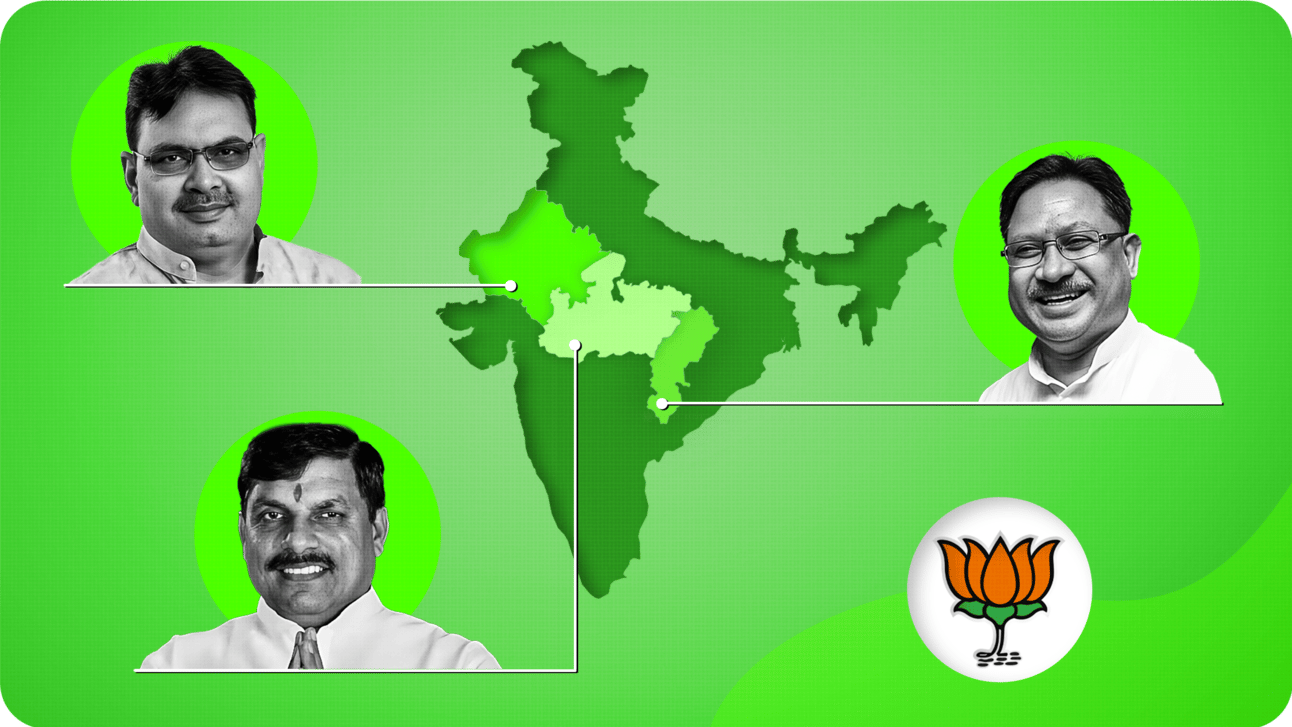
In a surprising move, the BJP announced new faces as Chief Ministers (CMs) for Chhattisgarh, Madhya Pradesh, and Rajasthan after winning Assembly elections. The party did not declare any CM candidates. Instead, it focused on PM Modi and his "guarantees" as the central theme of their campaign. It also made several MPs contest the elections.
With the BJP aiming for a third term in 2024, its chief ministerial choices are a clear effort to appeal to voters from various caste backgrounds.
Why does it matter?
Ideological representation: The selection of relatively unknown leaders for CMs and deputy CMs signals a shift from the older generation to a new one. It reflects a need to balance caste considerations, allegiance to the RSS (the BJP's ideological parent), and the rising influence of the Akhil Bharatiya Vidyarthi Parishad (ABVP) in preparing future leaders with a more assertive political approach.
Dealing with the Opposition: The BJP's selection process also aims to counter Congress' potential use of caste census as a political weapon in the upcoming national elections. MP's CM, Dr. Mohan Yadav, has ties to the RSS. He belongs to the OBC community, representing over 48% of the state's population. The party wants to assure voters, especially in Bihar and Uttar Pradesh, that it is not opposed to Yadavs, even as it tries to bring the Most Backward Castes into its fold.
Rajasthan's new CM, Bhajan Lal Sharma, comes from the Brahmin community. The deputy CMs are from the Rajput and Dalit communities, showing a balanced caste representation.
In Chhattisgarh, CM Vishnu Deo Sahai belongs to the tribal community, like the President of India, Droupadi Murmu. This is significant as it represents about 9% of the national population.
Supporters' perspective: BJP supporters see these choices as a new era in social justice politics, emphasizing the party's commitment to nurturing leaders from marginalized sections. And promoting the “samanya karyakarta” (ordinary workers) based on qualifications and merit. Many have a strong background in public service, with CM Yadav holding a PhD.
The decision to appoint relatively younger leaders sends a message against factionalism and internal power struggles. It aims to discourage heavyweights like Shivraj Singh Chouhan, Jyotiraditya Scindia, and Vasundhara Raje from disrupting party unity as the BJP prepares for the Lok Sabha polls.
Critics' perspective: The Congress party argues that these choices indicate a concentration of power in the hands of PM Modi and Amit Shah, sidelining people's preferences, and elected MLAs. Congress spokesperson Supriya Shrinate claims that the era of regional leaders is ending, marking the demise of democracy within the party.
What's next?
While the transformation in the BJP's leadership signals a shift from traditional political elites, it also raises interesting prospects for the party's future.
All three CMs are known supporters of Hindutva principles. The BJP's message for 2024 is clear: relying on PM Modi's popularity, ideological roots, achievements like the Ram mandir and Article 370 abrogation, and leveraging caste dynamics on the ground.
Un-charted
Justice gap widens with rising cases
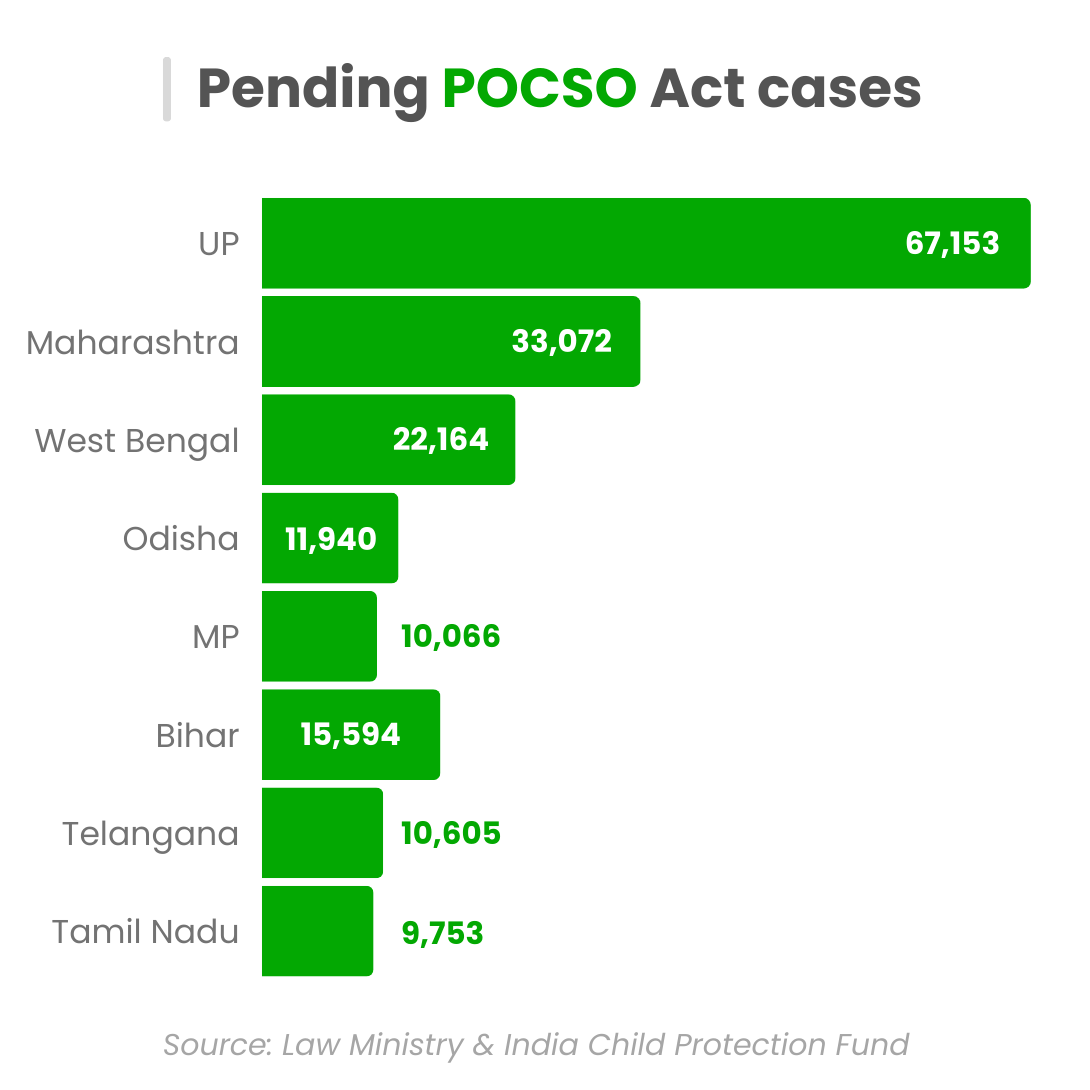
Until January 2023, there were more than 2.43 lakh Protection of Children from Sexual Offences (POCSO) cases waiting for trial in Fast Track Special Courts (FTSCs) in India. A recent study by the India Child Protection Fund (ICPF) reveals that each of the nearly 1,000 courts is clearing only about 28 cases per year, far below the expected 165. For example, Arunachal Pradesh and Delhi would take over 27 years to conclude all pending POCSO cases!
Established in 2019 using the ‘Nirbhaya fund’, FTSCs aim to handle sexual offence cases and complete trials within a year. However, the backlog has increased by over 170% since 2016, with only 3% of POCSO cases leading to convictions in 2022. This means the cost per conviction is approximately Rs 9 lakh.
This research raises concerns about the effectiveness of our judicial system. In 2022, Law Minister Kiren Rijiju urged Chief Justices of High Courts to speed up the setup of fast-track courts (FTC) and FTSCs. Out of the 1,023 sanctioned courts, only 731 are operational across 28 States and Union Territories.
Additionally, child rights activists emphasise that delayed justice prevents child survivors from moving forward with their lives.
Therefore, ICPF has suggested creating a public dashboard for these courts to enhance transparency. They also recommend that all FTSC staff, from police personnel to judges, exclusively work with these courts to prioritise cases.
Bonus section
Break the "Yes-man" image: Here's how

You cannot always say no if you want to ensure good relationships. But think about where you’re investing your time when deciding to say yes or no.
Before declining a request, ask the right questions. A task may seem overwhelming today, but it might not be due for a few weeks.
If a task is beyond your abilities, say, "Sorry, but that's outside my skill set," or "If you're okay with me taking extra time to learn, I'll give it a try." This could give you a chance for personal development.
When your boss asks for extra work, you can say, "Thanks for considering me, but I've planned to focus on X, Y, and Z this week." This allows them to reconsider the urgency of their request.
Be kind when saying no. For example, "I know saying no means you'll have to manage the task alone." Offer to help in small ways, like joining brainstorming sessions or proofreading drafts. This shows that you're still part of the team and ready to support.
Remember, saying no can be empowering, but maintain a strong reputation for good work ethic and enthusiasm first. This way, setting boundaries is seen as necessary for your well-being, not a negative habit.
NOTEWORTHY 📑
SHARE THIS VICHAAR 🙌

If you enjoyed reading my newsletter, please consider sharing it with your loved ones.
Was this forwarded to you? Sign up here.
If you want to give us feedback, Click here.
Read our previous newsletters here
Reply