- Soch Vichaar
- Posts
- What is the Women’s Reservation Bill?
What is the Women’s Reservation Bill?

Mohak Mangal
September 19th, 2023

What happened?
September 19 marked a historic day for the Indian parliament. The parliament moved to the new building for the proceedings of day 2 of the ongoing 5-day special session.
Law minister Arjun Ram Meghwal introduced the Women's Reservation Bill or Nari Shakti Vandan Adhiniyam in Lok Sabha. Talking to Rajya Sabha, PM Modi appealed to the members to pass the Bill unanimously.
What’s the Bill about?
The Bill seeks to reserve one-third (33%) of the total seats in state legislative Assemblies and Lok Sabha for women. These seats will be allotted by rotation to different state or union territory constituencies. According to the existing provisions, the reservation will only apply for 15 years. Moreover, one-third of the seats reserved for Scheduled Castes and Scheduled Tribes will be reserved for women of these groups.
The Bill was first introduced by the UPA government in the Lok Sabha in 1996. However, it failed to get approval. It was reintroduced by the NDA government four times but failed to get support. In 2010, the bill was passed by the Rajya Sabha but once again failed to gain support in Lok Sabha.
Are there any drawbacks?
The Bill aims to ensure greater participation of women in policy-making at the State and national levels. Its objective is commendable. However, observers have pointed out some drawbacks:
Seat rotation may reduce the incentive for the MPs to work for their constituencies. They might be less dedicated to their work because they wouldn’t be allowed to get re-elected from the seat.
The provisions of reservation don’t include Rajya Sabha and OBC women.
The reservation might continue to promote the unequal status of women since they wouldn’t be seen competing on merit.
It’ll restrict voters' choice to women candidates they may or may not prefer.
What’s next?
Once the Bill becomes an Act, the reservation will come into effect after the delimitation exercise. The exercise seeks to reorganise the electoral constituencies to provide equal representation to equal segments of the population. The exercise will be carried out only after the pending 2021 census is completed.
Experts believe the reservation is unlikely to roll out before 2029.
Dose of Positivity
Mushroom farming brings livelihood to women
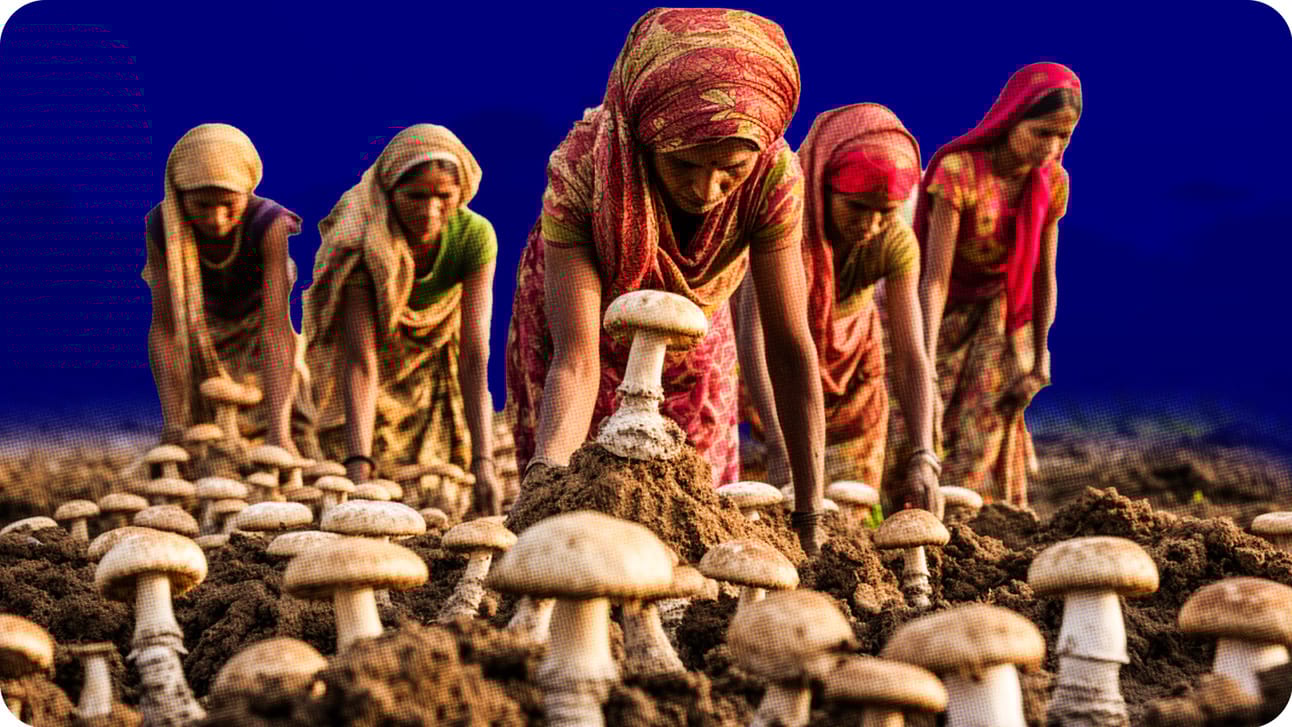
The diverse climatic condition in Chhattisgarh provides a fertile ground for the cultivation of mushrooms. Mushrooms are rich in protein, dietary fibre, vitamins, and minerals. Their different varieties–button, paddy, oyster, shiitake, milky–are used in food preparations like soup, vegetables, pickles etc. However, each of these varieties needs different settings to grow.
Dhristee, a social organisation, has been working with the tribal communities in Korba, Chhatisgarh, to set up micro-enterprises for mushroom cultivation. The women of these communities have formed self-help groups and attended workshops to learn systematic and scientific methods of cultivating edible fungi.
The organisation have taught the women to identify the maturity levels of mushroom seeds available in the market. The seeds or spawns are commonly available in bottles and become unsuitable for cultivation once they mature.
The women mix organic waste with disinfectant in a polythene bag. After adding the mushroom spawn, the bag is kept in the shade for 16-23 days. Water is sprinkled frequently to maintain moisture level. The yield of one bag can weigh nearly 2.5 kg and bring in anywhere between Rs 400-500.
Mushroom cultivation has opened up new vistas for the tribal women of Korba, who otherwise have limited job and economic opportunities. Urmila Yadav, a member of one self-help group, expressed that the community’s women feel more accountable for their lives.
Bonus Section
Lessons from Navy SEALs

US Navy SEALs undergo mentally and physically demanding military training. They’re equipped to carry out special military operations on SEa, Air, and Land (hence the name SEAL).
Here are three important lessons they can teach us:
Control stress
Your body’s stress response can give you a boost of energy and focus. However, your body takes a hit when the stress hormones remain elevated for longer periods. You might find it challenging to go back to relaxing mode.
The SEALs use a simple technique of 4 by 4 for 4 to control stress: Breathe in for 4 seconds. Breathe out for 4 seconds. Continue the cycle for 4 minutes.
Open a cookie jar
Ex-Navy SEAL David Goggins, nicknamed the ‘world’s toughest man’, tells people to write down all the bad times they survived on different chits of paper and put them all in a cookie jar.
The next time you’re in a difficult situation, open the jar, pick a chit and remind yourself of the difficulties you overcame and endured in the past.
Start by making your bed
William H. McRaven, a retired Navy Admiral, gave a Commencement Address at the University of Texas. He told the student to make their bed every morning so that they could start their day feeling accomplished.
It’s a simple task and serves as a reminder that little things matter in life. And if you’ve had a bad day, you’ll come home to a bed that is made, says McRaven.
Liked the Bonus Section? Fill out this form and join the waitlist for our new newsletter!
NOTEWORTHY 📑
Canada accuses the Indian government of killing a Sikh leader in their country.
How this virus killed 50 crore people.
Check out the Siddi community’s traditional craft of quilt-making.
A photo feature of Chennai’s fading love for cycles.
Watch astrophysicist Neil deGrasse Tyson explain superconductors.
HIRING ALERT! 🚨
SHARE THIS VICHAAR 🙌

If you enjoyed reading my newsletter, please consider sharing it with your loved ones.
Was this forwarded to you? Sign up here.
If you want to give us feedback, Click here.
Read our previous newsletters here
Reply